
Build a calmer nighttime routine with 10 evidence-based habits that quiet your mind and set you up for deeper, more restorative sleep.
Calma Path
October 18, 2026
Updated October 18, 2026
The Science of Habit Stacking
Learn how habit stacking works and how to link new fitness, nutrition, and sleep habits to routines you already do, using evidence-based behavior change principles.

Written by
Maya Reynolds
Maya Reynolds is a registered nurse turned wellness educator who specializes in translating clinical research into accessible, everyday health habits. She is passionate about helping people sustainably improve their fitness, sleep, and nutrition without the pressure of toxic wellness culture.
When I was working hospital nights, my “routine” was basically survival. I kept telling myself I needed more willpower, more motivation, more discipline. What I actually needed was a better system.
Habit stacking is one of the simplest systems I know for building a wellness routine that sticks, especially when you are busy, tired, or burned out. The idea is straightforward: you anchor a new habit to something you already do on autopilot, so your brain does not have to negotiate with you every day.

What habit stacking is
Habit stacking is not a single standalone scientific theory. It is a practical application of well-established behavior science ideas: cues shape behavior, repetition builds automaticity, and specific plans make follow-through more likely.
In other words, an existing habit becomes the cue. Instead of trying to remember a new behavior at a random time, you tie it to a stable moment that already happens most days.
The if-then structure
A habit stack is essentially an implementation intention, a planning tool studied in behavior science (often associated with psychologist Peter Gollwitzer). It looks like:
After I [current habit], I will [new tiny habit].
That small sentence matters because it removes decision-making. When the cue happens, the next action is already chosen.
Why stacking beats motivation
Motivation is real, but it is not reliable. Stacking works because it reduces startup friction, meaning the effort required to get started. “Activation energy” is a useful metaphor here, but the point is simple: the fewer steps between you and the habit, the more likely it happens.
You are more likely to do a 30-second action that is already attached to your day than a 30-minute plan that requires scheduling, perfect timing, and the right mood.
Three parts of a lasting stack
1) A stable cue
Choose an anchor you do almost every day, ideally at the same time and place. Good anchors are boring and consistent.
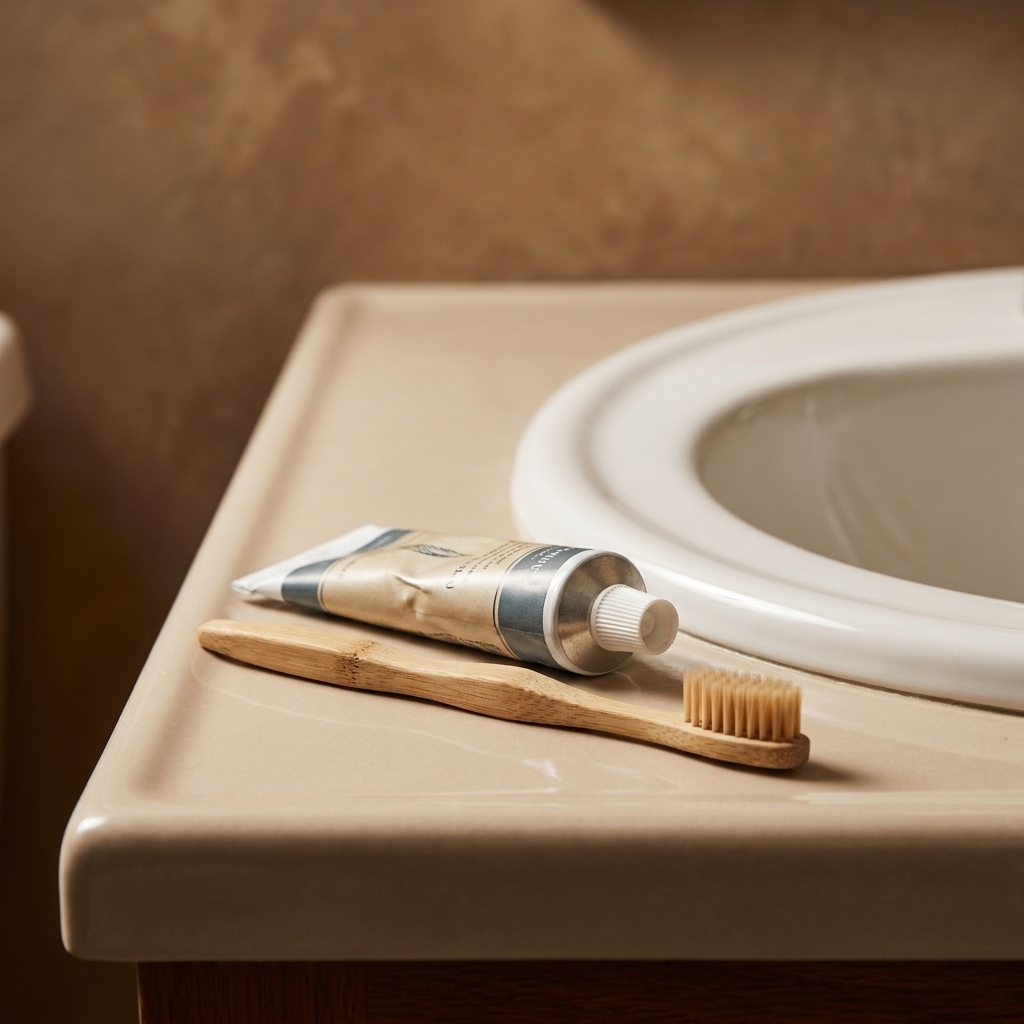
- Brushing your teeth
- Starting the coffee or kettle
- Feeding the dog
- Putting on shoes
- Sitting down at your desk
- Closing your laptop for the day
If your anchor is inconsistent, your stack will be inconsistent too.
2) A genuinely small habit
This is where most wellness routines fall apart. We try to stack something heroic onto a normal day. Your goal is “too easy to fail” at first. Think in the range of 10 seconds to 2 minutes.
- Two slow breaths
- Drink 6 to 10 sips of water
- Add one fruit to your lunch bag
- Do 5 squats while the microwave runs
- Write down one thing you are doing well
3) A clear done signal
Make it obvious when you have completed the habit. This reduces mental friction and helps your brain encode the loop.
- “I drank half the glass.”
- “I walked to the end of the block and back.”
- “I prepped one protein option.”
A done signal is not the same as a reward. The done signal defines completion. The reward is what makes you want to repeat it.
Pick an anchor that fits
If you have tried routines that lasted a week and then disappeared, it is usually not because you are “bad at habits.” It is often because your anchor did not match your real day.
Use stress-proof anchors
On your hardest days, what still happens?
- You use the bathroom.
- You eat something.
- You charge your phone.
- You get into bed.
Those are powerful anchors because they are more likely to survive stress and shift changes.
On night shift, for example, I could not always count on a “morning routine,” but I could count on clocking in, washing my hands, and filling a water bottle. Those became anchors when everything else moved around.
Match the habit to the moment
A good stack respects context. If you want to build a movement habit, anchor it to a moment when you are already standing. If you want to build a sleep habit, anchor it to the first step of your wind-down.
Stacks for fitness, food, and sleep
Here are practical stacks that work for busy schedules. Pick one. Keep it small for two weeks. Then build.
Fitness stacks
- After I put on my shoes, I will walk for 3 minutes.
- After I start the coffee, I will do 10 calf raises at the counter.
- After I use the bathroom at work, I will take the stairs for one flight.
- After I brush my teeth at night, I will do 60 seconds of gentle stretching.
These micro-movements might feel too small, but they build identity and consistency. And consistency is what turns into capacity.
Nutrition stacks
- After I pour my morning drink, I will fill a water bottle and put it where I can see it.
- After I open the fridge for lunch, I will add a fiber food (fruit, beans, veggies, oats) to the meal.
- After I put groceries away, I will wash one produce item and place it at eye level.
- After I plate dinner, I will add one color (greens, orange veg, berries) if available.
Notice the theme: additions, not restrictions. This is how you improve nutrition without triggering the all-or-nothing spiral.
Sleep stacks
- After I make my first morning drink, I will step outside for a couple minutes of daylight.
- After I eat dinner, I will dim one set of lights in my home.
- After I plug in my phone at night, I will start my wind-down cue (shower, skincare, or a book).
- After I get into bed, I will do 5 slow breaths with a longer exhale.
Even brief daylight can help cue your body clock. For many people, brighter morning light and a little more time outside works even better, but small is a solid start.
Why stacks fail
The most common issue I see is stacking too much, too fast. People create a beautiful morning routine with seven steps, miss day three, and conclude they cannot stick to anything.
Here is the recalibration I use personally and with the people I work with:
One anchor, one habit, one week
Start with a single stack until it feels almost automatic. Then you can:
- Scale up: increase duration or intensity (3-minute walk becomes 8 minutes).
- Stack onto the stack: add one new tiny habit right after the first.
- Add a new anchor: build a separate stack at a different time of day.
Keep a minimum version
Your plan needs a built-in version for rough days. This protects consistency and reduces guilt.
- Good day: 20-minute workout.
- Hard day: 2 minutes of movement.
Both count, because both reinforce the identity: “I am someone who moves my body.”
Make the environment help
Habit stacking is even stronger when your environment supports the habit. In nursing, we call this setting yourself up for success. In behavior science, it is reducing friction.
Increase cues, decrease effort
- Keep resistance bands by the couch.
- Put a bowl of fruit where you can see it.
- Store cut veggies at eye level.
- Leave a book on your pillow if you want to read instead of scroll.
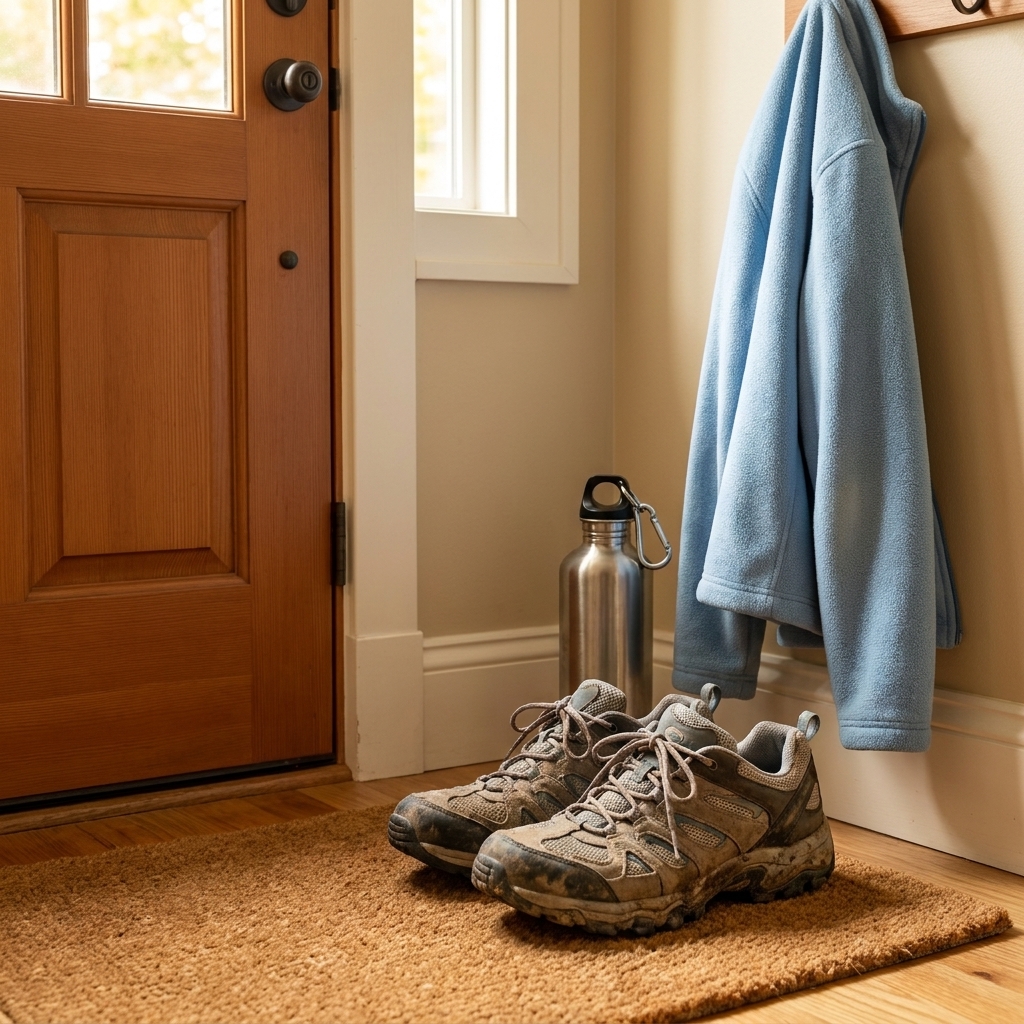
- Set walking shoes near the door, not in the closet.
Troubleshooting
If your anchor is stable but the habit still does not happen, it usually means one of three things: the habit is still too big, the cue is not specific enough, or something in the environment is adding friction.
- Make it smaller: if “stretch for 60 seconds” is not happening, make it “touch my toes once.”
- Make it more specific: “After I brush my teeth, I will do two calf raises in the bathroom.” The where matters.
- Add a visible prompt: put the water bottle on the coffee maker, or leave the resistance band on the sofa cushion.
- Change the anchor: if the anchor happens but you are always interrupted right after it, pick a different moment.
How long until it feels automatic?
You will see different numbers online, but the honest answer is: it depends. Habits become more automatic with repetition, consistency, and a stable cue. A simple habit attached to a reliable anchor tends to lock in faster than a complex behavior that requires planning.
Instead of watching the calendar, watch for these signals:
- You start doing the habit without negotiating.
- You notice when you miss it, because it feels off.
- The cue almost pulls you into the next action.
If you are not there yet, that is not failure. It usually means the habit is too big, the anchor is unstable, or the environment has too much friction.
A gentle 7-day plan
If you want a simple starting point, here is a one-week plan I love because it can support steadier energy and sleep, without asking for perfection.
Days 1 to 2: Pick your anchor
- Choose one anchor you do daily.
- Write your stack sentence and put it somewhere visible.
Days 3 to 4: Make it tiny
- Cut the habit in half. Then cut it in half again.
- Practice it even if you do not feel like it.
Days 5 to 7: Add a simple reward
Rewards do not have to be treats. They can be a satisfying check mark, a quick “done” note, or taking 10 seconds to notice how you feel.
- Track with a single dot on a calendar.
- Say out loud: “I keep promises to myself.”
- Pair it with something pleasant (your favorite playlist during the 3-minute walk).
FAQ
Can I habit stack if my schedule changes a lot?
Yes. Use anchors that travel with you, not time-based ones. Examples: “after I brush my teeth,” “after I eat,” “after I get in the car,” “after I plug in my phone.”
What if I miss a day?
Treat it like neutral data. Restart at the next cue. A good rule is: never miss twice if you can help it. Perfection is not required, but quick recovery matters.
Is habit stacking good for mental health habits too?
Yes. Try: “After I sit down at my desk, I will take three slow breaths,” or “After I wash my face at night, I will write one line in a journal.” Tiny regulation practices add up.
How many stacks should I do at once?
Start with one. If you are already stretched thin, one stack can be the win. Add more only when the first feels easy.
Any safety notes?
If you have an injury, a medical condition, a sleep disorder, or you are dealing with severe anxiety or depression, keep your stacks gentle and consider checking in with a clinician. A tiny habit should feel supportive, not punishing.
Bottom line
A lasting wellness routine is not built on intensity. It is built on repeatable actions that fit into your real life. Habit stacking works because it respects how the brain learns: through cues, repetition, and reduced decision fatigue.
If you take nothing else from this, take this: pick one anchor you already do, attach one tiny habit, and keep it small long enough that it starts to feel normal. That is how routines become sustainable.