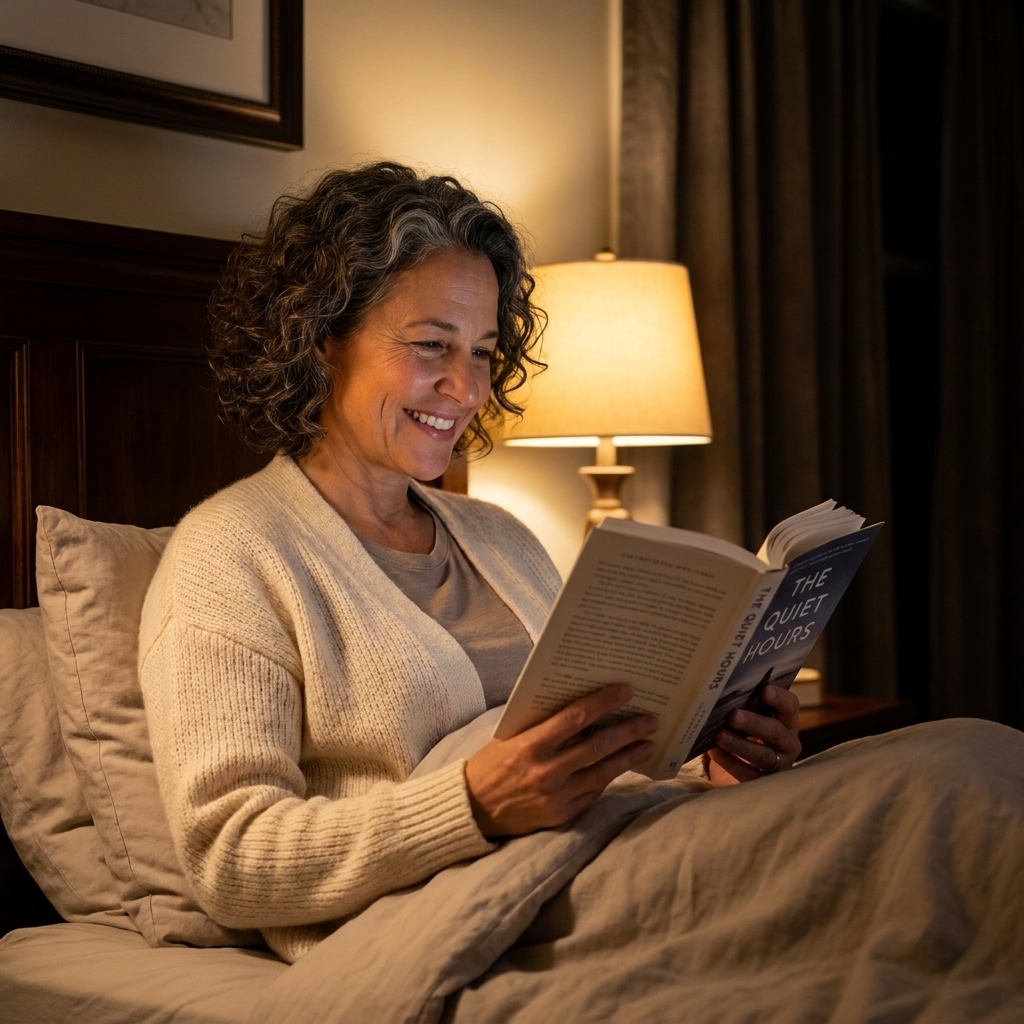
Build a calmer nighttime routine with 10 evidence-based habits that quiet your mind and set you up for deeper, more restorative sleep.
Calma Path
October 18, 2026
Updated October 18, 2026
A Neuroscientist-Approved Evening Routine for an Anxious Mind
Calm racing thoughts before bed with a simple, science-backed routine: dim lights, cool your room, unload worries, and cue your brain for sleep in 60 minutes.

Written by
Maya Reynolds
Maya Reynolds is a registered nurse turned wellness educator who specializes in translating clinical research into accessible, everyday health habits. She is passionate about helping people sustainably improve their fitness, sleep, and nutrition without the pressure of toxic wellness culture.
If your brain likes to replay conversations, rewrite tomorrow’s to-do list, and hold a 2 a.m. meeting you never agreed to, you are not broken. You are human with a nervous system that learned to stay alert.
As a former bedside nurse, I know what it feels like to crawl into bed exhausted and still not be able to “turn off.” What helped me was treating evenings like a landing sequence, not a crash landing. Sleep science backs this up: your brain takes cues from light, temperature, timing, and attention. Stack the right cues, and sleep becomes more likely, even when anxiety is part of the picture.

This routine is designed to be doable on a regular weeknight. No extreme rules, no pricey supplements, and no shame if you cannot do every step. Pick the pieces that feel realistic and build from there.
Why nights feel louder
Anxiety tends to spike at night for a few practical reasons:
- Fewer distractions: When the day quiets down, your brain finally has room to process unfinished stress.
- Bright light after sunset: Bright, blue-enriched light (including many screens and overhead LEDs) can delay your body’s “night signal,” but how much depends on brightness, distance, and time.
- Body temperature timing: Sleep tends to come easier when your core body temperature drops slightly. Late workouts, hot rooms, and long hot showers right before bed can work against that for some people.
- Conditioning: If your bed has become a place where you worry, your brain learns: bed equals problem-solving time.
The goal is not to force sleep. The goal is to make your environment and habits say one consistent message: “We are safe, the day is done, it’s okay to power down.”
The 60-minute wind-down
Think of this as a flexible set of cues, not a rigid checklist. If you only have 20 minutes, do the first two steps and one mental step.
T-minus 60: Shift the light
Light is one of the strongest drivers of your circadian rhythm. Bright, blue-leaning light in the evening tells your brain it is still daytime. You do not need total darkness. You need a clear trend toward dimmer, warmer light.
- Dim overheads first. Switch off bright ceiling lights and use lamps if possible.
- Aim for warm lighting. Softer amber bulbs or warm settings are ideal.
- Make screens less stimulating. Lower brightness and use a night shift or warm filter. Better yet, park your phone outside the bedroom if that is feasible.
Low-cost tip: A single warm bedside lamp can shift your nervous system baseline more than most “sleep products.”
T-minus 45: Cool the room
Your body naturally drops core temperature as it prepares for sleep. You can help that along by cooling the room and avoiding heat traps.
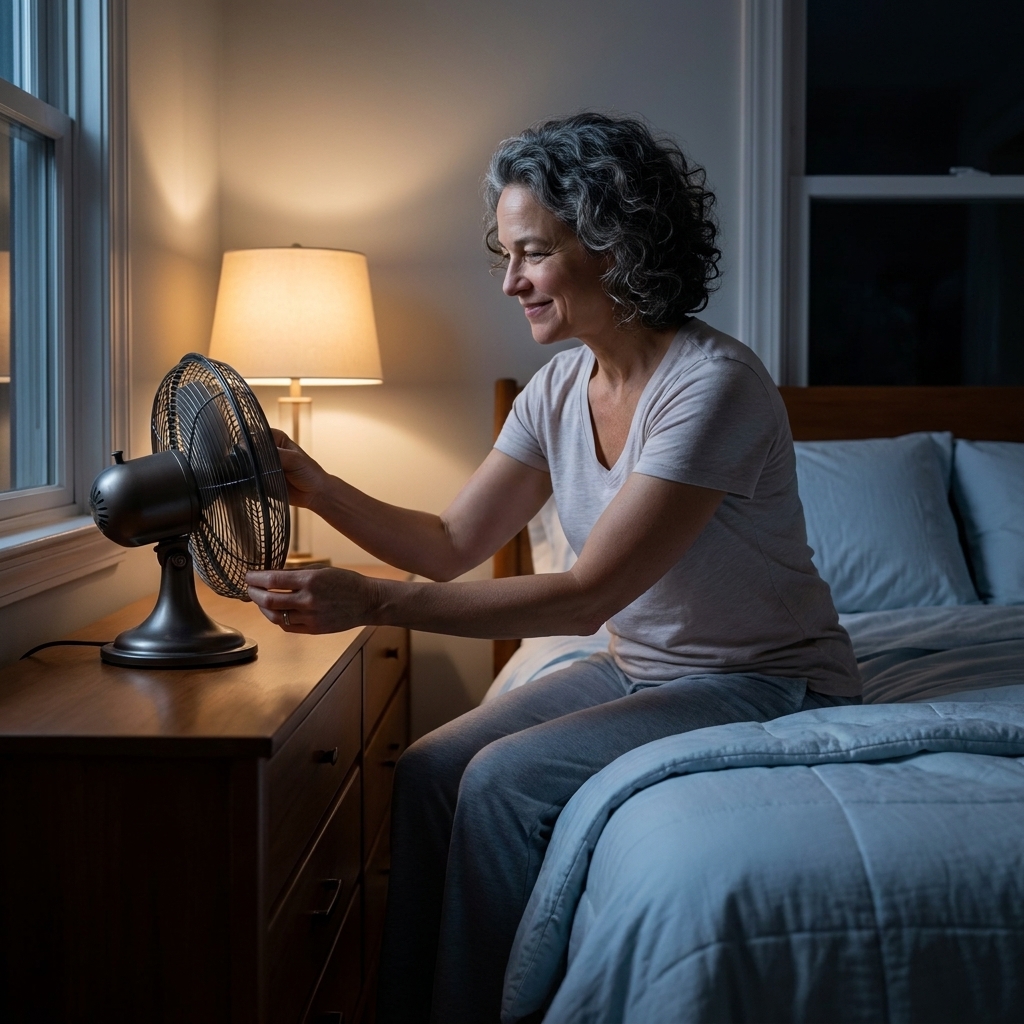
- Cool the bedroom. Many people sleep best in a cool room. If you do not control the thermostat, try a fan, lighter bedding, or breathable pajamas.
- Ventilate if you can. Even a few minutes of cooler air can help signal night.
- Try a warm shower earlier, not later. A warm shower 60 to 90 minutes before bed can help some people because your body cools afterward. If a hot shower right before bed relaxes you, keep it shorter and notice whether you feel overheated afterward.
T-minus 30: Do a 5-minute brain unload
An anxious brain hates uncertainty. When you climb into bed without a plan, your mind tries to create one, usually by worrying. Give it a container.
On paper, write:
- Tomorrow’s top 3: The three tasks that matter most.
- Loose ends list: Anything your brain is trying to hold.
- One tiny first step: Make the starting line obvious. Example: “Open laptop and draft email subject line.”
This is not journaling for perfection. This is cognitive offloading. You are telling your working memory: you can stand down, we stored the info.
T-minus 25: Set a worry appointment
If you tend to spiral, try this: give worry a time slot, then close the meeting.
- Set a timer for 7 minutes.
- Write your worries as bluntly as they show up.
- When the timer ends, write one line: “Not solving tonight. Next step tomorrow is…”
This works because your brain is more likely to let go when it trusts you will come back to the issue in daylight.
T-minus 15: Downshift with breathing
Slow breathing is a direct lever on arousal. You do not have to “clear your mind.” You are simply changing the body’s pace so the mind is more likely to follow.
Try this for 3 to 5 minutes:
- Inhale gently through the nose for 4 seconds
- Exhale slowly for 6 to 8 seconds
Longer exhale tends to be calming for many people. If counting makes you anxious, just aim for “inhale normal, exhale longer.”
T-minus 10: Choose one low-stimulation activity
Pick something that feels boring in the best way.
- Read fiction or something light (paper is ideal).
- Stretch gently or do a short mobility routine.
- Do a simple skincare routine with dim lighting.
- Listen to a calm audiobook or a familiar, non-triggering podcast at low volume.
Skip: intense news, heated texting, work email, or anything that turns your brain into a courtroom.
Lighting that helps
You do not need to ban screens forever. The goal is to stop blasting your eyes with “midday” at 10 p.m.
- Two-zone lighting: Brighter light earlier in the evening if needed, then switch to dim, warm lamps 60 minutes before bed.
- Keep bathroom lights gentle: If possible, use a night light or a dim lamp so a quick bathroom trip does not fully wake your brain.
- Angle light downward: Light that hits your eyes directly (often from overhead or eye-level sources) can feel more alerting. A lamp lower in the room is often softer.
Temperature and texture
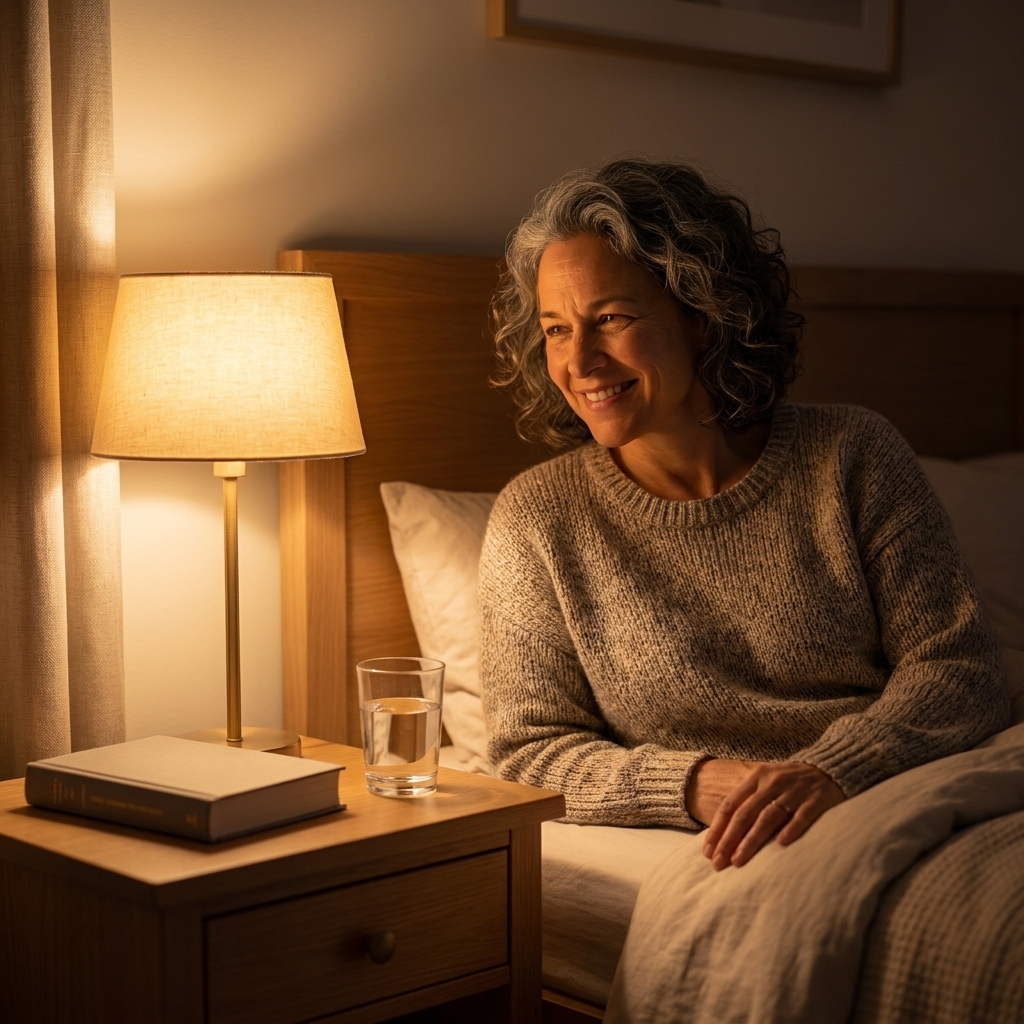
When anxiety is high, your brain scans for safety signals. Comforting sensory cues can reduce the sense of “on edge” and make it easier to settle.
- Cool room, warm feet: If you get cold, try socks or a light throw while keeping the room cool.
- Try gentle weight if you like pressure: Some people find a heavier blanket calming. Skip weighted blankets for young children, and be cautious if you have breathing problems, circulation issues, claustrophobia, or limited mobility. If in doubt, ask a clinician.
- Reserve the bed for sleep and intimacy: If you can, do worry work and scrolling somewhere else. It helps your brain re-learn that bed equals sleep.
Stop the 2 a.m. spiral
Use a repeat phrase
When you try to force anxiety away, it often fights back. A softer approach is acknowledging and redirecting.
Try: “This is my brain doing its safety job. I can rest anyway.”
Repeat it like a lullaby. The point is not to convince yourself, it is to stop feeding the debate.
Give scary thoughts a container
If the worry is real, you do not have to solve it at night. Give it a place to go.
- Keep a notepad by the bed.
- If you wake with a thought, write one sentence.
- Add: “Next step tomorrow: ____.”
This prevents your brain from rehearsing the thought repeatedly to avoid forgetting it.
If you are awake and not sleepy
Sleep pressure builds when you are awake. If you lie in bed tense for a long time, your bed can get linked with frustration.
If you are awake and no longer sleepy: get up, keep lights dim, do something calm (reading, gentle stretching), then return to bed when sleepy. Try not to clock-watch if it ramps you up. This is not failure. It is retraining.
If you work late or have kids
If your evenings are packed
You can condense the routine into three essentials:
- Dim lights as soon as you can.
- Brain unload for 3 minutes.
- Long-exhale breathing for 2 minutes in bed.
If nighttime is your only quiet time
I get it. Sometimes your phone is your only adult conversation. Consider a compromise:
- Take 10 minutes for your scroll earlier in the evening.
- Then switch to audio (audiobook, music) for the last 20 minutes while lights are dim.
Protecting the last slice of your evening is often the difference between “tired but wired” and truly sleepy.
Common questions
How long before bed should I stop screens?
Best case is 60 minutes, but real life varies. If that feels impossible, start with 20 minutes of screen-free time and keep brightness low the rest of the evening. Consistency beats perfection.
What about caffeine or alcohol?
If anxiety and sleep are a struggle, caffeine timing matters. Many people do better cutting off caffeine by early afternoon, but sensitivity varies. Alcohol can make you sleepy at first, then fragment sleep later and worsen early-morning wake-ups for some people. If you drink, consider keeping it earlier and lighter and notice how your nights respond.
Should I take melatonin for anxiety-related insomnia?
Melatonin is a timing signal, not a sedative. It can help some people shift their schedule, but it does not fix the underlying anxiety loop. If you use it, smaller doses are often discussed in sleep medicine (commonly around 0.3 to 1 mg), and more is not always better. Check with a clinician if you are pregnant, trying to conceive, managing autoimmune conditions, or taking medications that could interact.
What if my anxiety feels physical, like chest tightness?
Start with physiology: longer exhales, a cool room, and gentle movement. If you ever have chest pain, shortness of breath, fainting, or symptoms that feel unusual for you, seek urgent medical care. Anxiety is common, but new or severe symptoms deserve evaluation.
When to get more help
If insomnia or nighttime anxiety is happening most nights for more than a few weeks, is wrecking your daytime functioning, or comes with panic, depression, trauma nightmares, loud snoring, choking or gasping in sleep, it is worth talking with a clinician. For chronic insomnia, CBT-I (cognitive behavioral therapy for insomnia) is a first-line, evidence-based treatment and can be life-changing, especially if your bed has become a stress trigger.
A signal, not a test
You do not have to earn sleep by doing everything right. You are building a set of cues that tell your brain: the workday is over, the lights are softer, the temperature is cooler, the worries have a place to go, and your body can stand down.
Tonight, choose just one shift: dim the overhead lights, cool the room, or do the 5-minute brain unload. Small signals, repeated, are how you train an anxious mind to trust bedtime again.