Use light exposure, consistent wake times, and strategic meal timing to realign your body clock. Practical steps that work in real life, not toxic wellness c...
Calma Path
October 18, 2026
Updated October 18, 2026
10 Evening Habits for Better Sleep
A science-backed evening routine to reduce stress, support your circadian rhythm, and help you fall asleep faster and sleep more deeply, without fads or perfection.

Written by
Maya Reynolds
Maya Reynolds is a registered nurse turned wellness educator who specializes in translating clinical research into accessible, everyday health habits. She is passionate about helping people sustainably improve their fitness, sleep, and nutrition without the pressure of toxic wellness culture.
When I was working hospital nights, my “bedtime routine” was mostly a desperate face-plant into the pillow, followed by racing thoughts and a 3 a.m. adrenaline spike I did not ask for. If that sounds familiar, I want you to know something: better sleep is rarely about willpower. It is about cues.
Your brain responds to consistent signals that say, “You are safe, it is dark, and it is time to power down.” The habits below are evidence-based, realistic, and can help lower evening arousal and stress over time. Pick two to start. Keep them small. Let consistency do the heavy lifting.
A note for shift workers: if you sleep during the day, keep the same principles but shift the timing. Think “lights-dim” before your sleep, protect darkness with blackout curtains and an eye mask, and get bright light when you need to be alert.

The goal: lower arousal
Good sleep is a mix of sleep pressure (how long you have been awake) and circadian timing (your internal clock). Evening habits work best when they reduce stress activation and reinforce a predictable rhythm: dimmer light, lower stimulation, gentler body temperature changes, and a consistent landing sequence.
Try this mindset shift: You are not “earning” sleep. You are removing obstacles so your biology can do what it already knows how to do.
1) Pick a lights-dim time
Light is one of the strongest cues for your circadian rhythm. Bright light at night, including blue-rich light from LEDs and screens, can suppress melatonin and nudge your internal clock later. Color matters, but so does intensity and timing. You do not need to live by candlelight, but a clear shift helps.
- Pick a time 60 to 90 minutes before bed when you dim the house lighting.
- Swap overheads for lamps or warm bulbs in the evening.
- If you must work at night, use a desk lamp aimed at your work surface rather than bright ceiling lights.
2) Create a screen sunset
I am not here to shame your phone. I am here to protect your sleep. Screens can be a triple-whammy: stimulating content, cognitive engagement, and light exposure. For some people, that mix is enough to delay sleep onset or make sleep feel lighter. For others, it is mostly about what they are consuming, not the screen itself.
Options that tend to work:
- Best: stop scrolling 45 to 60 minutes before bed.
- Better: move screens to one place (not your bed) and set a timer.
- If you cannot: lower brightness, use night mode, keep content boring, and hold the screen farther from your face.
Think of it as reducing input so your nervous system can downshift.
3) Eat earlier when you can
Going to bed overly full can increase reflux, keep your body more activated, and fragment sleep. On the flip side, going to bed hungry can also wake you up. The sweet spot is usually a balanced dinner earlier in the evening, with a small snack only if you truly need it.
- Aim for: dinner 2 to 4 hours before bed when possible.
- If you need a snack: keep it small and easy to digest, like yogurt, a kiwi, a banana with nut butter, or whole grain toast.
- Limit: very spicy, greasy, or heavy meals close to bedtime.

4) Set a caffeine cutoff
Caffeine has a long half-life, which means that even an afternoon coffee can still be active in your system at bedtime. Sensitivity varies wildly, so the “right” cutoff is personal. A helpful rule of thumb is to avoid caffeine about 6 to 8 hours before bed, then adjust based on how you feel.
- Common starting point: last caffeine by 12 p.m. to 2 p.m.
- If you are sensitive or anxious: move it earlier for one week and compare sleep quality.
- Remember: tea, chocolate, pre-workout, and some pain relievers also contain caffeine.
5) Do a 10-minute worry dump
If your brain turns into a committee meeting the second your head hits the pillow, you are not broken. You are human. One evidence-supported strategy from cognitive behavioral therapy for insomnia (CBT-I) is scheduled worry or journaling earlier in the evening, so bedtime is not the first time you let your thoughts speak.
- Set a timer for 10 minutes 1 to 2 hours before bed.
- Write: what is on your mind, what you can control, and the smallest next step for tomorrow.
- Close the notebook when the timer ends. That is the boundary.
6) Use a calming breath
Slow breathing techniques can reduce physiological arousal by engaging the parasympathetic nervous system. You do not need a perfect method. You need one you will do consistently.
Two simple options:
- Extended exhale breathing: inhale 4 seconds, exhale 6 to 8 seconds, repeat for 3 to 5 minutes.
- Box breathing (gentler version): inhale 4, hold 4, exhale 4, hold 4, repeat for 2 to 4 minutes.
If you feel lightheaded, shorten the counts and breathe normally between rounds.
7) Take a warm shower
This one feels almost too simple, but it is backed by sleep physiology. A warm bath or shower can help you fall asleep faster by encouraging a helpful drop in core body temperature afterward. Many people also find it reduces muscle tension and signals “day is done.”
- Timing: about 60 to 120 minutes before bed tends to work best.
- Keep it realistic: even a 10-minute warm shower counts.
- Bonus: dim lights in the bathroom afterward to keep the sleepy signal strong.
8) Do gentle mobility
Regular daytime exercise supports sleep, but late-night high-intensity training can be too activating for some people. In the evening, think: mobility, stretching, gentle yoga, or a slow walk.
- Try: 5 minutes of hamstring stretch, hip opener, chest stretch, and child’s pose.
- Keep intensity low: you should feel calmer afterward, not wired.
- If you love evening workouts: finish at least 2 to 3 hours before bed and add a longer cool-down.

9) Make bed a sleep cue
Stimulus control is a core CBT-I tool: your brain learns what “bed” means based on what you do there. If bed equals scrolling, working, snacking, and stress, your brain stays on alert. If bed equals sleep and intimacy, your brain starts to power down when you enter the room.
- Keep the bed for: sleep and sex.
- Lower friction: charge your phone across the room or outside the bedroom.
- Optimize basics: keep the room cool, make it as dark as possible, and reduce noise with a fan, white noise, or earplugs if needed.
10) Keep a steady wake time
This is the habit most people skip, and it is one of the most effective anchors for your internal clock. Your wake time stabilizes your circadian rhythm. Sleeping in late after insomnia often backfires by reducing sleep pressure the next night, creating a frustrating cycle.
- Pick a wake time you can keep within about an hour, even on weekends.
- After a rough night: keep the wake time, get morning light, and consider a short early-afternoon nap (20 to 30 minutes max, ideally before 3 p.m.) only if you truly need it.
- Be kind to yourself: the goal is rhythm, not punishment.
A simple 45-minute wind-down
If you want a step-by-step routine, here is a calm, repeatable option:
- 45 minutes before bed: dim lights, plug in devices outside the bedroom if possible.
- 35 minutes before bed: warm shower or wash face, change into sleep clothes.
- 25 minutes before bed: 10-minute worry dump, then close the notebook.
- 15 minutes before bed: gentle stretching or legs-up-the-wall.
- 5 minutes before bed: extended-exhale breathing in bed, lights out.
This is designed to be doable, even on busy nights.
Troubleshooting
If you are exhausted but cannot fall asleep
If you have been awake for a while and you feel alert or frustrated, get out of bed. Do something quiet in dim light (paper book, calm music). Go back to bed when you feel sleepy again. This helps your brain reconnect bed with sleepiness, not struggle.
If you fall asleep fine but wake at 3 a.m.
Early-morning awakenings can be linked to stress load, alcohol, a too-warm room, or mood. Try tightening the evening routine (especially alcohol and screens), keeping the room cool, and using the same calm reset if you cannot fall back asleep.
If you rely on alcohol to unwind
Alcohol can make you sleepy at first, but it tends to fragment sleep later in the night and reduce REM. If stopping feels hard, start by moving your last drink earlier, alternating with water, or cutting the amount in half for a week and seeing what changes.
When to get support
If insomnia lasts more than 3 months, affects daytime functioning, or comes with loud snoring, gasping, restless legs, significant mood changes, or nighttime hot flashes that are disrupting sleep, it is worth talking with a clinician. Persistent sleep issues can also be driven by anxiety, depression, chronic pain, thyroid problems, medication side effects, or sleep apnea. CBT-I is considered first-line treatment for chronic insomnia and can be life-changing.
If your insomnia is severe, sleep restriction therapy is best done with guidance from a CBT-I clinician or a vetted program, rather than DIY.
You deserve help that is evidence-based, not a pricey gadget or a shame spiral.
Quick FAQ
How long does it take for evening habits to improve sleep?
Some people notice small changes within a few nights (especially with light and screen changes). For many of us, meaningful improvement often builds over 2 to 4 weeks of consistency.
Do magnesium or melatonin count as “evening habits”?
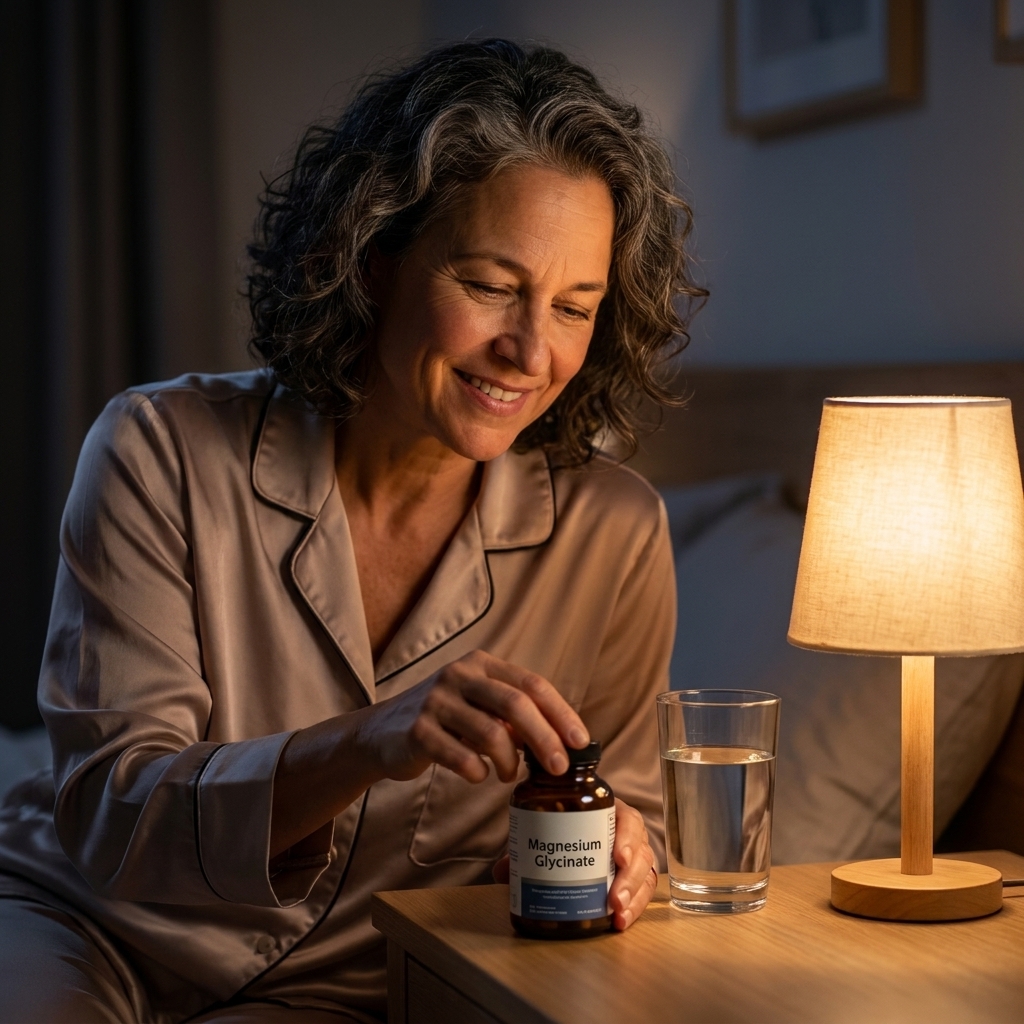
They can, but I prefer starting with behaviors first. Magnesium may help some people with relaxation, and melatonin is more of a circadian timing cue than a sedative. If you use supplements, keep doses conservative and discuss them with your clinician, especially if you are pregnant, trying to conceive, or taking other medications.
What is the single best habit if I only choose one?
Anchor your wake time and get morning light. That combo stabilizes your circadian rhythm and often makes evenings easier.