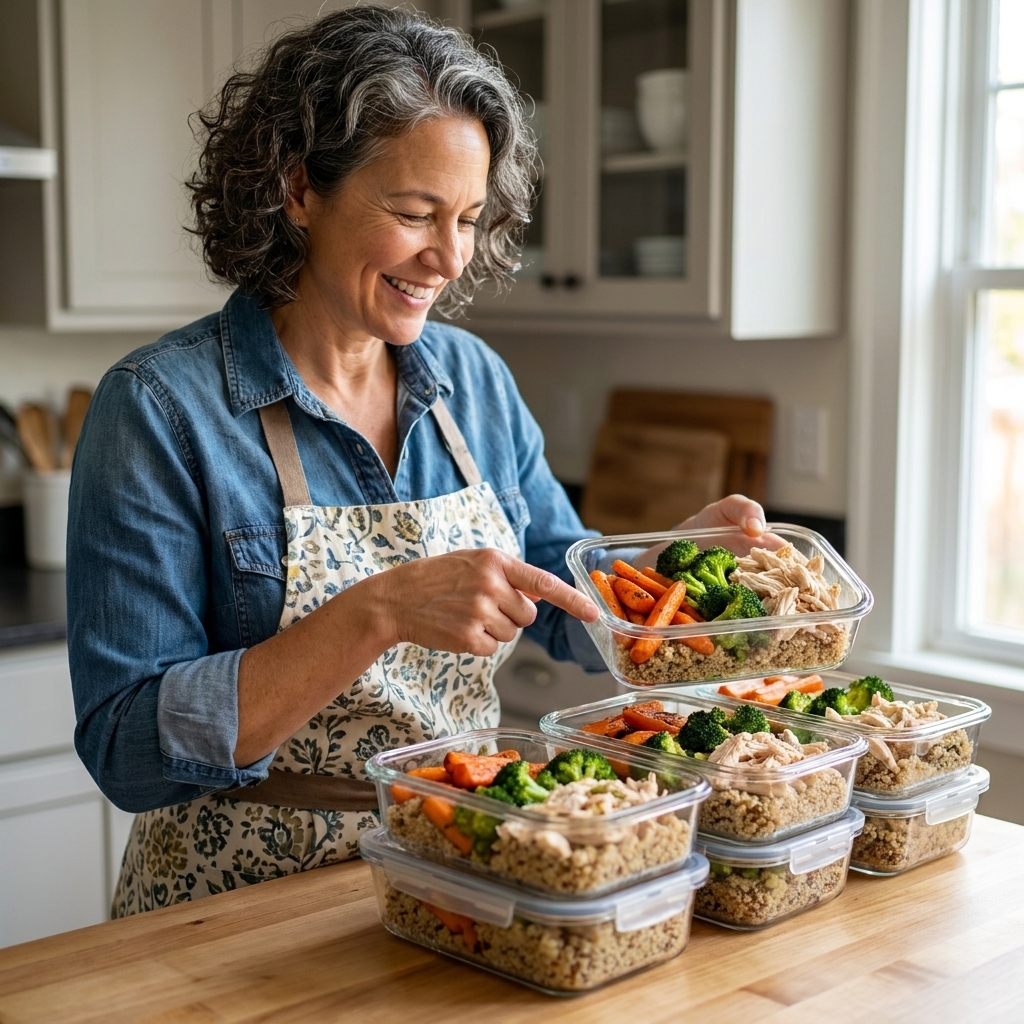
Plan, shop, and bulk-cook a full week of balanced meals without blowing your grocery budget. A repeatable strategy with budget staples, storage tips, and a r...
Calma Path
October 18, 2026
Updated October 18, 2026
Sunday Prep for Effortless Weekday Nutrition
A low-stress Sunday prep routine that reduces decision fatigue: a flexible menu, mix-and-match ingredients, and smart shortcuts that make healthy eating easier all week.

Written by
Maya Reynolds
Maya Reynolds is a registered nurse turned wellness educator who specializes in translating clinical research into accessible, everyday health habits. She is passionate about helping people sustainably improve their fitness, sleep, and nutrition without the pressure of toxic wellness culture.
When I worked hospital shifts, my “meal plan” was usually a vending machine plus whatever I could eat in the car between errands. Not because I didn’t care about my health, but because by the time I got home my brain was done making decisions. If you have ever stared into the fridge and felt oddly irritated at your own groceries, you’ve met decision fatigue.
The habit of Sunday prep is not about becoming a meal prep influencer or eating the same chicken and broccoli forever. It is about automating the choices that drain you during the week, so your nutrition stays steady even when your schedule is not.
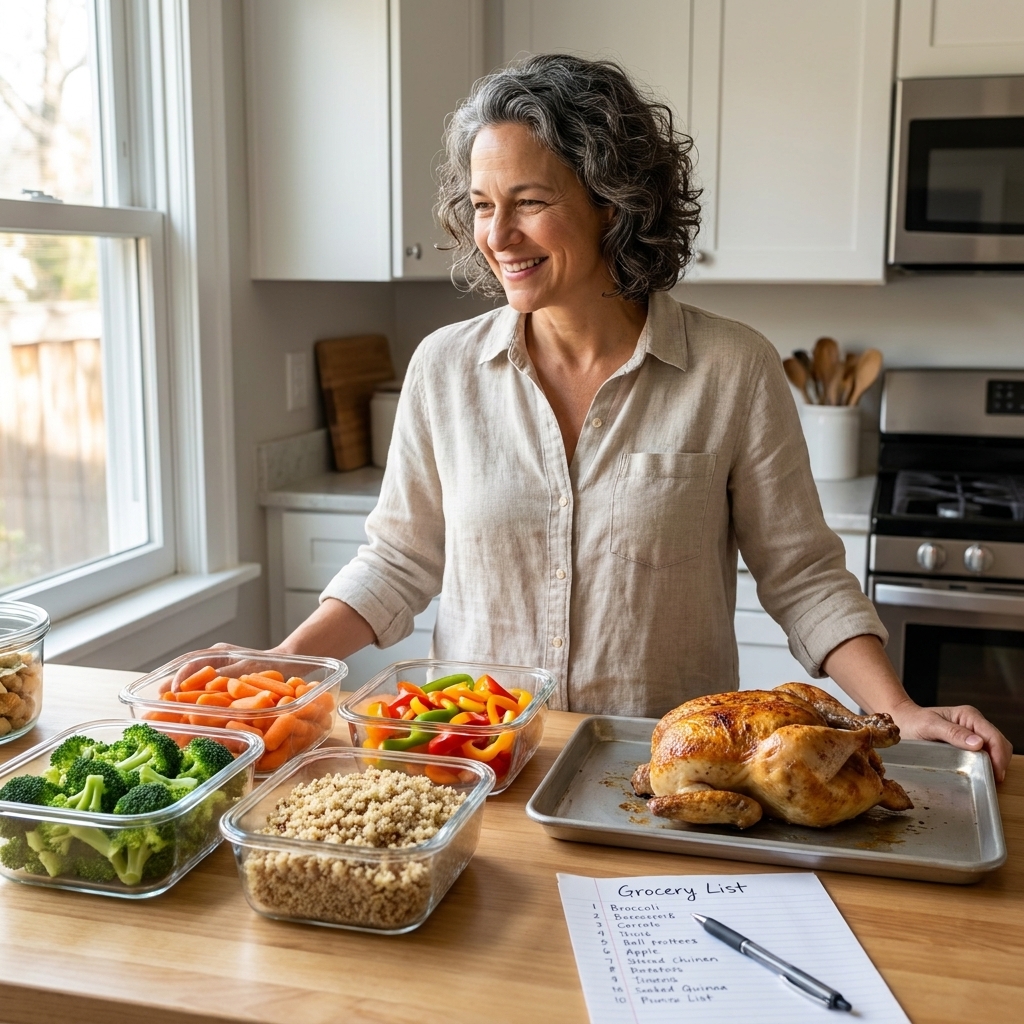
Below is a practical system you can repeat every week, with built-in flexibility and plenty of room for shortcuts. No perfection required.
Why Sunday prep works
Healthy eating often fails for a frustratingly human reason: we run out of bandwidth. By Wednesday afternoon, your stress is up, time is tight, and your self-control is not infinite. Sunday prep works because it shifts the “hard thinking” to a moment when you have more space.
The three problems it solves
- Decision fatigue: fewer daily choices about what to eat.
- Friction: fewer steps between “I’m hungry” and “I have something balanced.”
- Default options: when you have ready-to-go components, you are less likely to end up with random snack dinners that do not satisfy.
Think of it like laying out your workout clothes the night before. It is not magic. It is environmental design.
Prep building blocks
If traditional meal prep has ever backfired for you, it is usually for one of these reasons: you got bored, your plans changed, or the food quality tanked by day four. The fix is to prep modular components that can become multiple meals.
A simple formula
- Protein: chicken, tofu, beans, eggs, Greek yogurt, tuna, tempeh
- Fiber-rich carbs: brown rice, quinoa, potatoes, oats, whole-grain wraps
- Color: roasted vegetables, salad kits, frozen veg, pre-cut options
- Flavor: sauces, dressings, herbs, spice mixes, citrus
- Easy fats: olive oil, avocado, nuts, seeds, cheese
When you have these on hand, lunch becomes “assemble and go,” and dinner becomes “heat, add sauce, done.”
Your 60-90 minute prep
This is the routine I recommend to clients who want structure without a second job. Set a timer, put on something enjoyable, and aim for “good enough.”
Step 1: Pick a tiny menu
Pick:
- 2 proteins (one animal-based, one plant-based if you like variety)
- 2 vegetable strategies (one roasted, one raw or quick)
- 1 carb base (grain or potatoes)
- 1 breakfast you can repeat 3 to 5 times
- 1 emergency meal for nights things go sideways
That’s it. You are not planning 21 unique meals. You are choosing defaults.
One plug-and-play example
- Proteins: sheet pan chicken thighs + canned chickpeas
- Veg strategies: roasted broccoli and peppers + bagged salad kit
- Carb base: rice (rice cooker or microwavable packets)
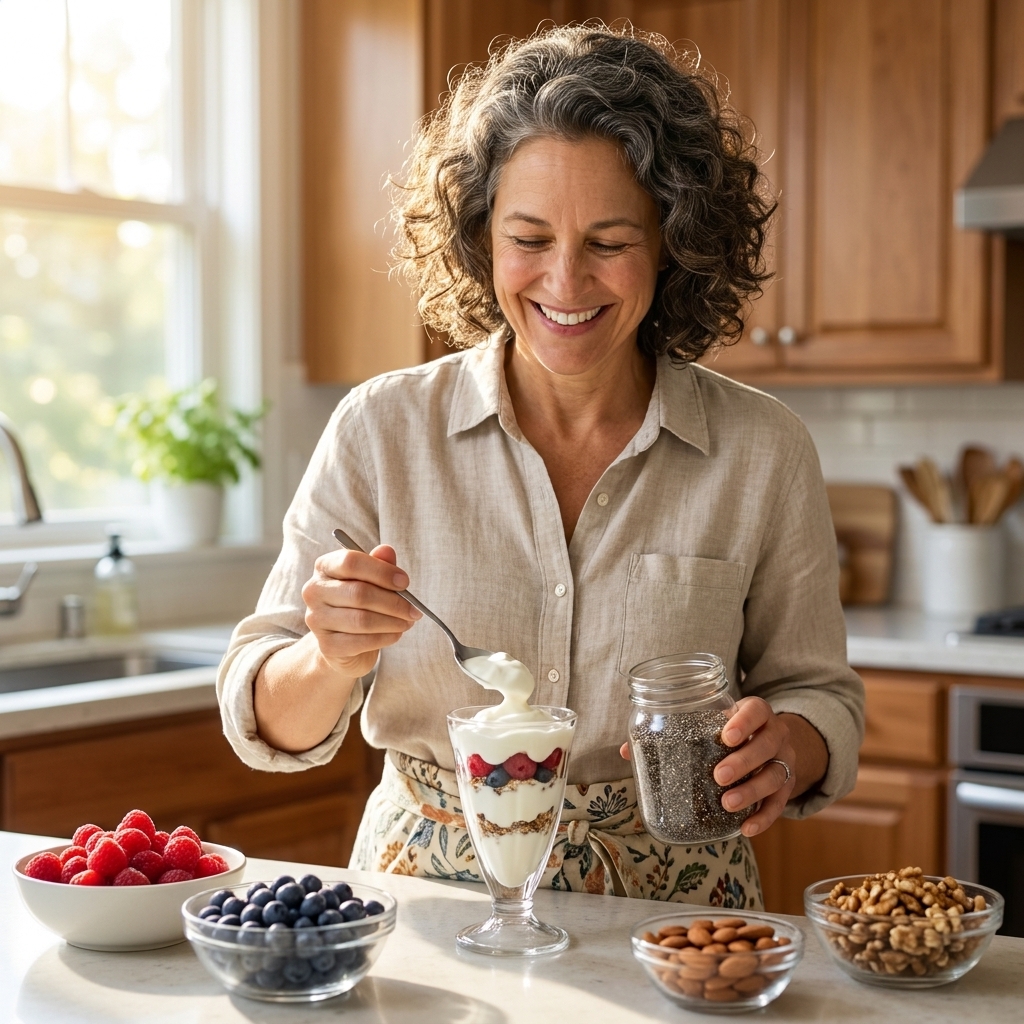
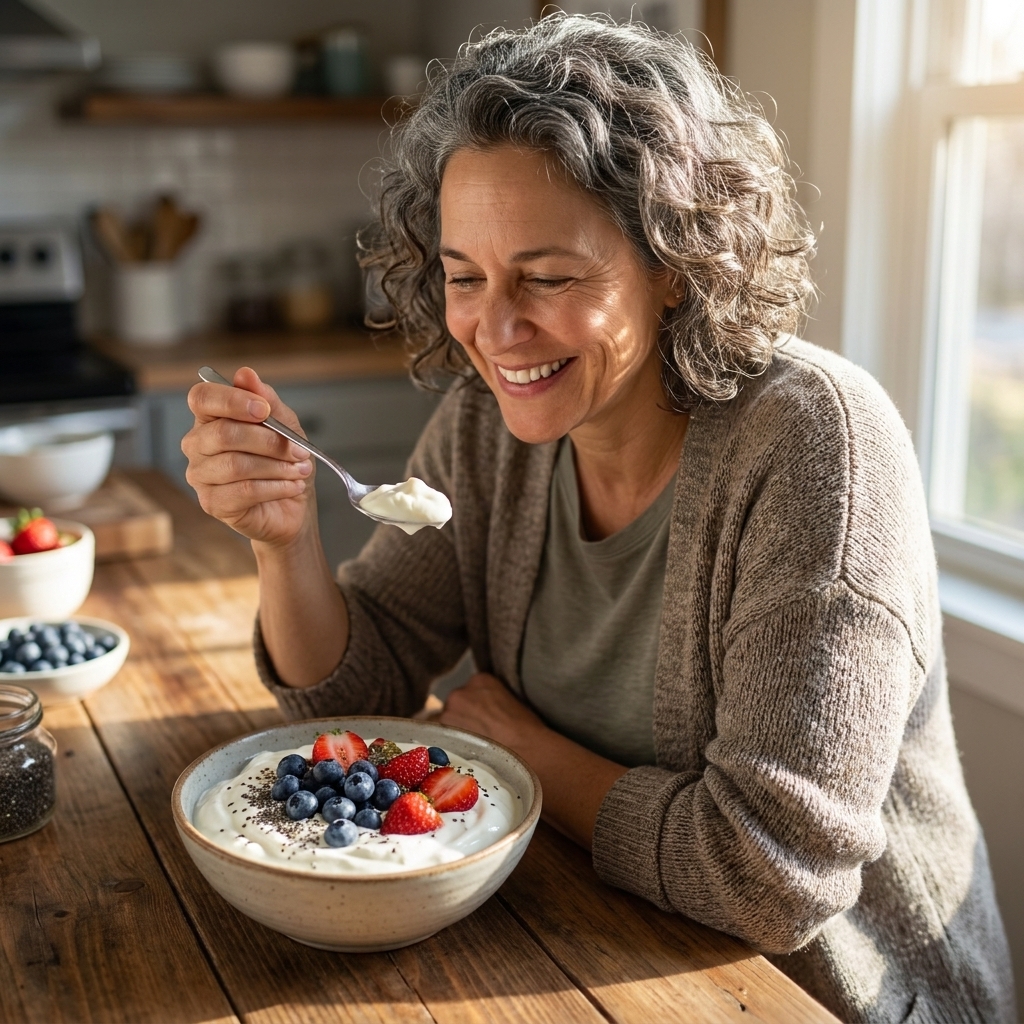
- Breakfast: Greek yogurt + berries + granola (or overnight oats)
- Emergency meal: frozen veggies + frozen dumplings or edamame, plus soy sauce or chili crisp
Step 2: Grocery with automation
Use a repeating list. Most weeks, your cart should look similar. Rotate flavors, not the entire structure.
- Time-savers that count as real life: bagged salad kits, pre-cut veg, frozen vegetables, rotisserie chicken, canned beans, microwavable rice, pre-cooked lentils.
- One “fun” item: a new sauce, spice blend, or fruit. This prevents boredom without blowing up the system.
Step 3: Prep in order
Start what takes the longest first, then stack tasks while things cook.
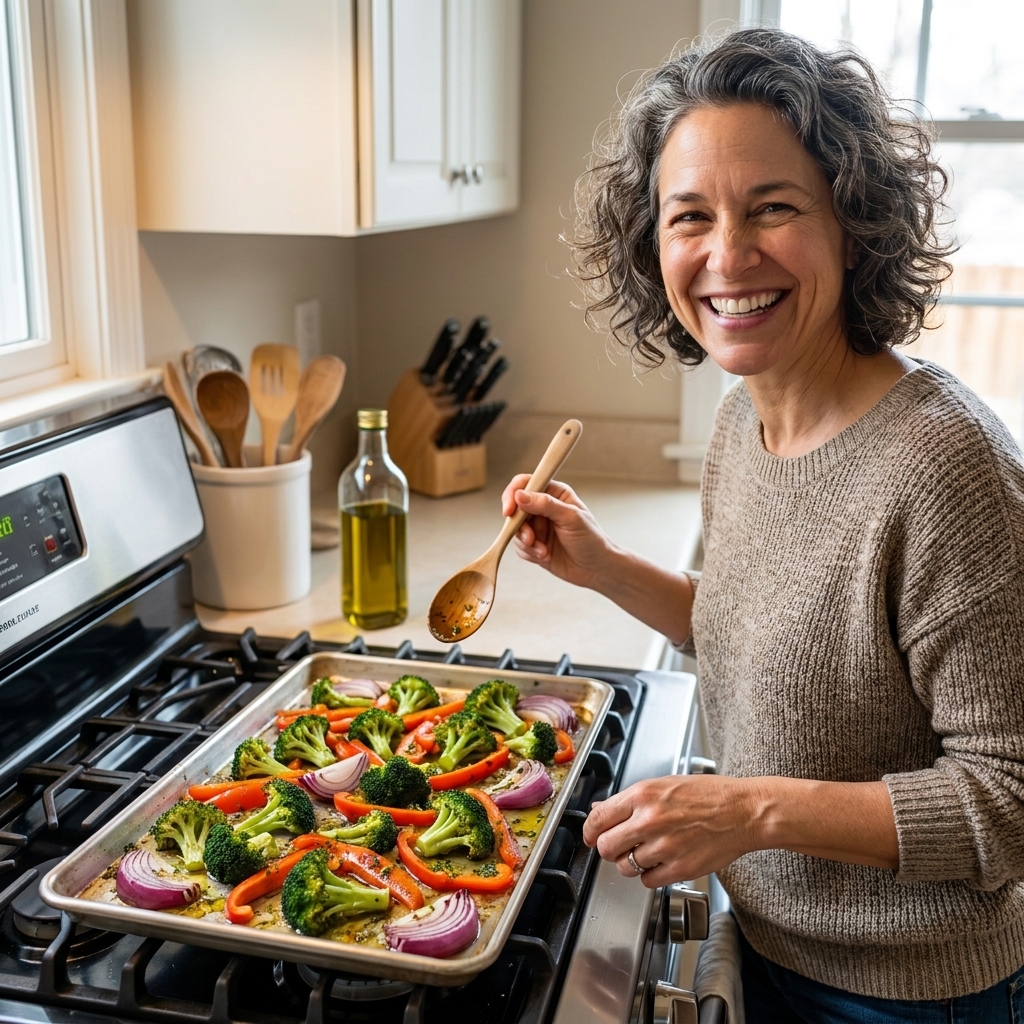
- Heat the oven; start roasting vegetables.
- Start the carb (rice cooker, instant pot, or boil potatoes).
- Cook protein (sheet pan chicken, tofu on a second tray, turkey sauté, or hard-boiled eggs).
- Wash and chop grab-and-go produce (berries, cucumber, carrots, bell peppers).
- Mix one sauce (or choose a store-bought one you genuinely enjoy).
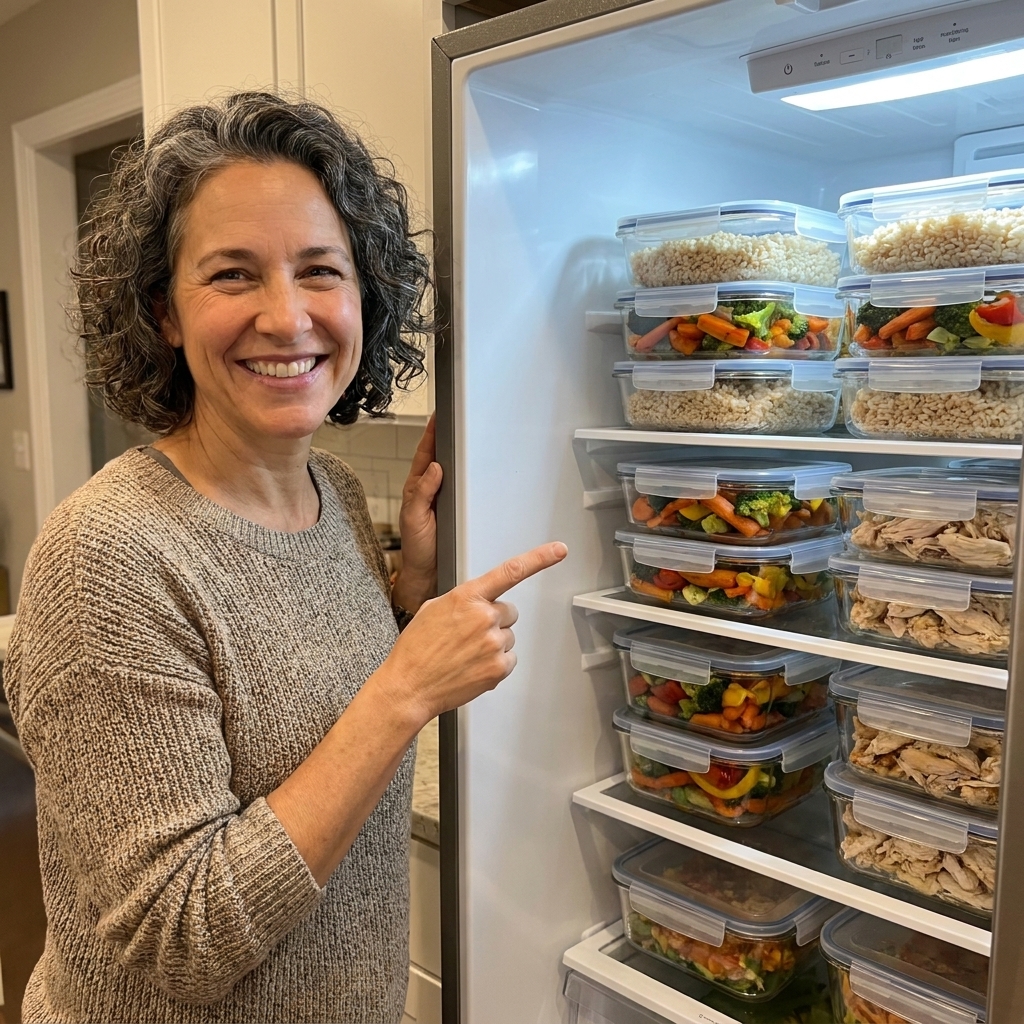
Step 4: Store for access
You do not have to pre-portion every meal. The goal is to make healthy choices the easiest choices.
- Front of fridge: ready protein + washed produce + a sauce
- Eye-level shelf: your planned breakfasts
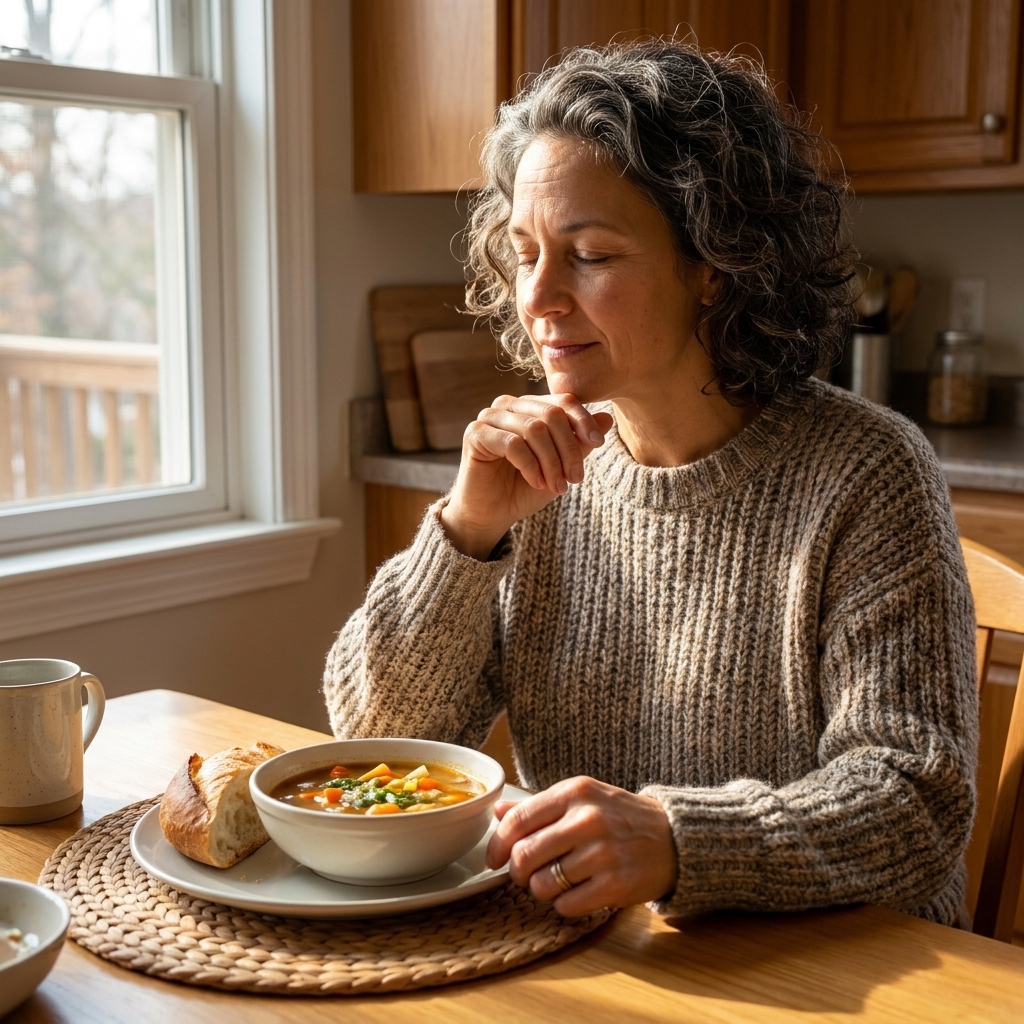
- Freezer backup: a couple of “future you” meals (frozen soup, burritos, or leftovers)
Mix and match meals
Here is an example of what Sunday prep can turn into, without cooking a brand-new meal each night.
If you prep
- Shredded rotisserie chicken
- Roasted mixed vegetables
- Cooked quinoa or rice
- Washed greens or salad kit
- One sauce (pesto, tahini-lemon, salsa, or a yogurt-based dressing)
You can eat
- Grain bowl: quinoa + chicken + roasted veg + sauce
- Salad upgrade: salad kit + extra chicken + seeds or cheese
- Wrap night: tortilla + chicken + greens + salsa
- Fast stir-fry: reheat rice + add frozen veg + add chicken + soy-ginger sauce
- Soup shortcut: boxed broth + leftover veg + chicken + a handful of spinach
Same ingredients, different personalities. That’s the point.
Emergency dinners
Everyone needs a plan for the nights your prep runs out early or your day completely derails. Emergency meals are not a failure. They are a safety rail.
My favorite emergency combos
- Frozen veggies + frozen protein + microwave rice (add a bottled sauce you like)
- Eggs + toast + fruit (breakfast-for-dinner is underrated)
- Canned beans + salsa + shredded cheese (microwave into a quick bowl)
- Instant oatmeal + peanut butter + banana (surprisingly filling, minimal effort)
A good emergency meal is: easy, quick, and satisfying, and usually built from freezer or pantry staples.
Food safety and freshness
I have to say it: safe storage matters. You do not need to be anxious about it, just consistent. General USDA leftovers guidance is a solid baseline, and FoodSafety.gov is a helpful reference point when you want specifics by food type.
- Most cooked proteins and cooked grains: generally best within about 3 to 4 days when refrigerated. If you will not eat it in that window, freeze a portion on day one.
- Roasted vegetables: often hold up for about 3 to 5 days for best quality, depending on the vegetable and how moist it is.
- Bagged salads: use earlier in the week and keep them cold.
- Cut fruit: often best within about 2 to 3 days for best quality, depending on the fruit.
Cool hot foods promptly and refrigerate within about 2 hours (sooner if your kitchen is warm). Shallow containers help food cool faster, which is good for both safety and texture.
When in doubt: keep foods cold, reheat leftovers to 165°F/74°C or until steaming hot, and trust obvious spoilage signs like off smells, slime, or unexpected bubbling. Also worth remembering: some foodborne bacteria do not always change how food looks or smells, so when something has been sitting out too long or is well past its window, it is safer to toss it.
Minimum viable prep
If you are in a busy season or managing burnout, start smaller. Consistency beats intensity every time.
Minimum viable Sunday prep
- Buy a rotisserie chicken or baked tofu
- Buy two bags of frozen vegetables
- Make one pot of microwave rice or a quick grain
- Wash fruit or buy pre-washed
- Choose one sauce or dressing you love
This is enough to turn multiple weeknight meals into “heat and eat.”
Common obstacles
“I get bored eating the same thing.”
Keep the base the same, rotate flavors. Change sauces, spice mixes, and textures. Crunchy toppings like pumpkin seeds, nuts, or toasted breadcrumbs can make leftovers feel new.
“I never know what I’ll feel like eating.”
That is exactly why building blocks help. You are not committing to one meal, you are giving yourself options that are all workable.
“I don’t have Sunday time.”
Use a split prep: 10 minutes to plan and order groceries, then 20 minutes midweek to refresh (wash greens, cook a second carb, restock fruit). Or do a Wednesday reset instead of Sunday. The day does not matter. The system does.
“Meal prep feels like diet culture.”
I hear you. This is not about restriction or shrinking yourself. It is about reducing stress and helping support steady energy and more consistent meals. Prep is self-respect, not punishment.
Sunday checklist
- Pick 2 proteins, 1 carb, 2 veg strategies, 1 breakfast, 1 emergency meal
- Shop with repeats and shortcuts
- Cook in this order: roast veg, cook carb, cook protein
- Wash and chop one grab-and-go produce option
- Choose or mix one sauce
- Store for access: front-of-fridge wins
- Freeze one portion if you will not eat it within about 3 to 4 days
FAQ
Is meal prep healthy if I eat leftovers all week?
Yes, for most people it is a practical way to eat more consistently. Nutritionally, leftovers can be just as balanced as fresh meals. The key is variety across the week and safe storage.
How many meals should I prep?
Start with 2 to 4 weekday meals worth of components. You can always scale up. The goal is to remove pressure, not create a second job.
Do I need special containers?
No. Use what you have. If you do buy containers, choose a few stackable, leak-resistant ones you actually like opening. Convenience is part of the health benefit.
What if I am trying to eat more protein or fiber?
Sunday prep is perfect for that. Add an extra protein option (hard-boiled eggs, Greek yogurt, edamame) and a fiber anchor (beans, lentils, oats, chia, berries, roasted vegetables).
Any quick dietary swaps?
Vegetarian: swap chicken for tofu, tempeh, eggs, or lentils. Vegan: build around beans, lentils, tofu, and a tahini-based sauce. Gluten-free: choose rice, potatoes, quinoa, and corn tortillas. Dairy-free: use hummus, avocado, or dairy-free yogurt for creamy sauces. If you have allergies, keep your “emergency meal” staples allergy-safe and truly no-brainer.
A calmer week
Sunday prep is a small habit with a big ripple effect. When weekday food decisions become more automatic, you free up mental space for everything else: sleep, movement, relationships, and just being a person.
Pick one version of this system, try it for two Sundays, and adjust based on what felt genuinely helpful. Your plan should fit your life, not the other way around.