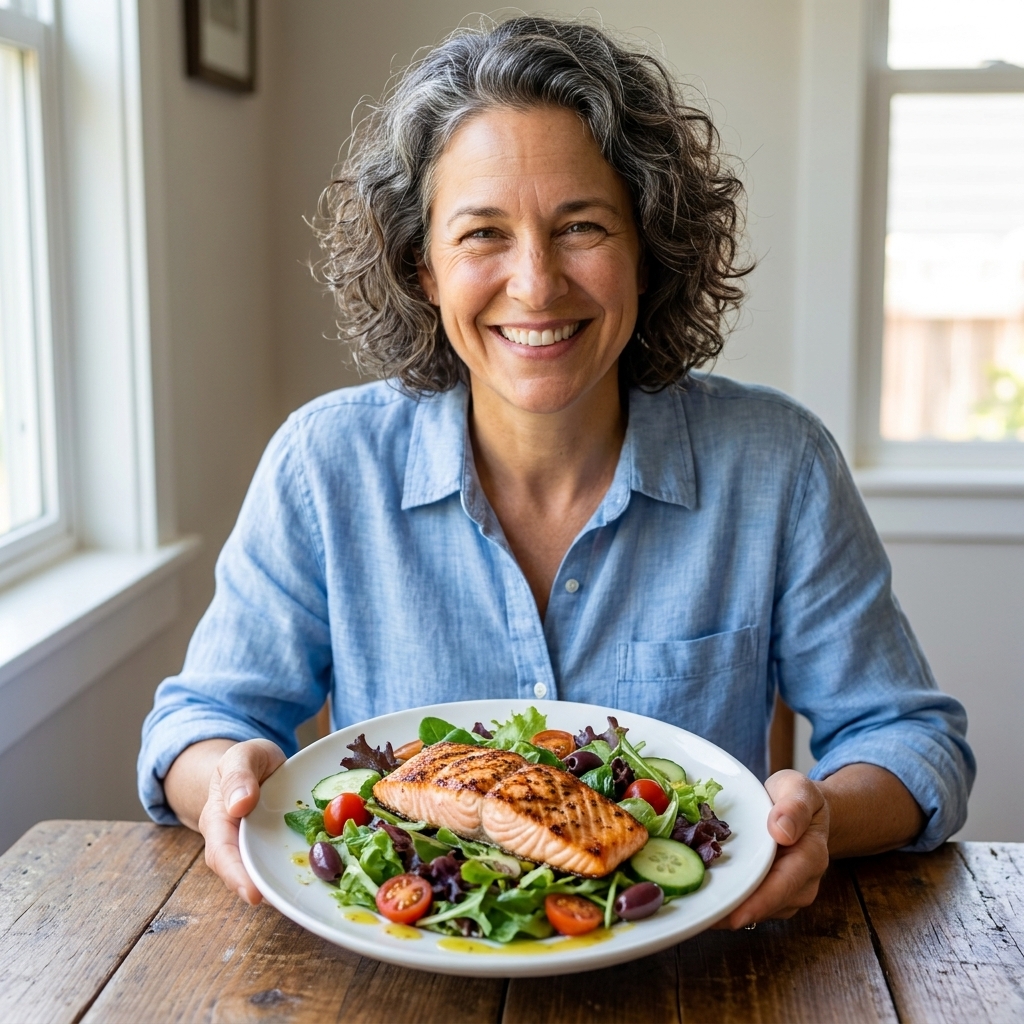
Filling, realistic snack ideas that help prevent mid-afternoon cravings. 15 protein-forward options with simple tips for staying satisfied.
Calma Path
October 18, 2026
Updated October 18, 2026
Budget Meal Prep That Actually Works
A step-by-step weekly strategy to meal prep on a budget, including planning, a smart grocery list, bulk-cooking basics, mix-and-match meals, food safety tips, and a realistic cost range.

Written by
Maya Reynolds
Maya Reynolds is a registered nurse turned wellness educator who specializes in translating clinical research into accessible, everyday health habits. She is passionate about helping people sustainably improve their fitness, sleep, and nutrition without the pressure of toxic wellness culture.
Meal prep can save real money, but only if it is set up to prevent two common budget leaks: food waste and impulse buys. When I was working long hospital shifts, I learned the hard way that “I will just grab something later” usually turns into expensive takeout, skipped meals, or random snacks that never add up nutritionally.
This is a weekly strategy you can repeat: one short planning session, one focused shop, and one main cooking block. You will end the week with flexible building blocks, not seven identical containers you resent by Wednesday.
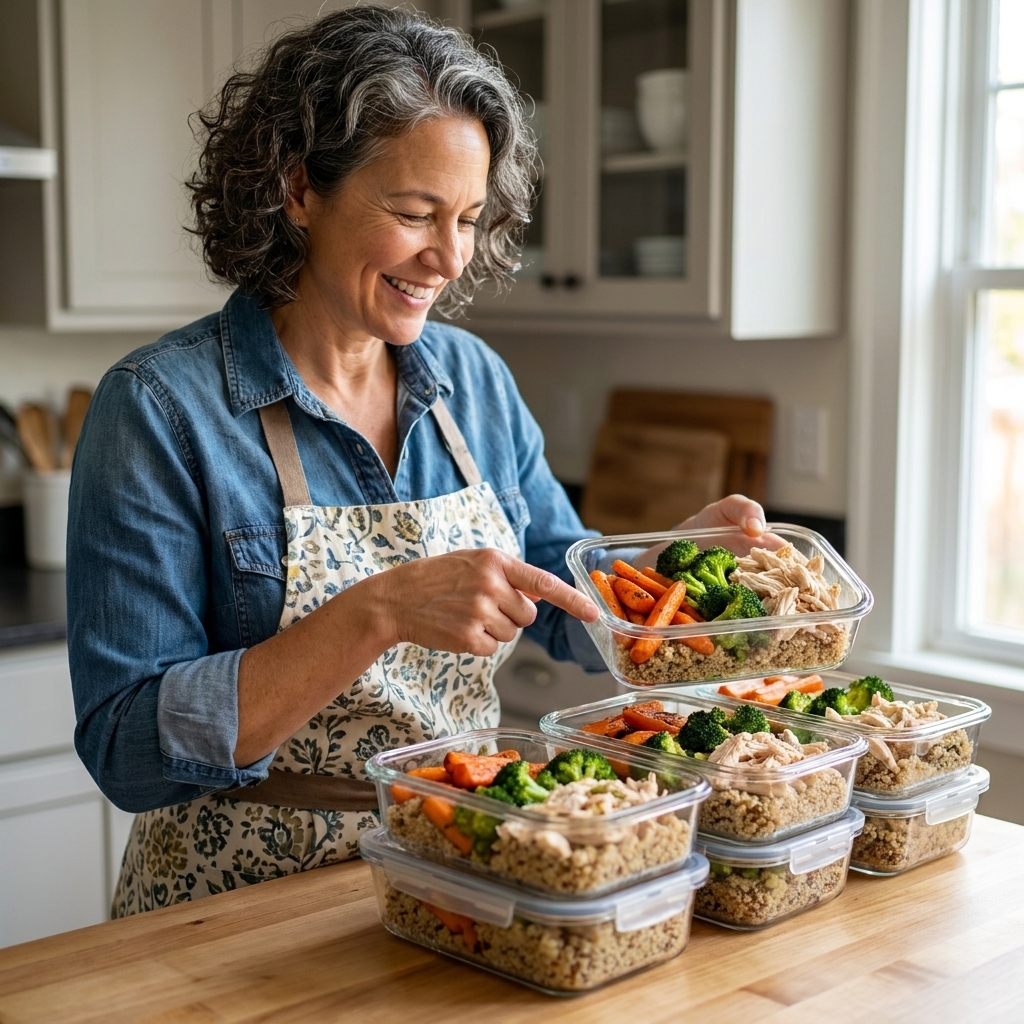
The budget meal prep mindset
“Budget” should not mean tiny portions or sad meals. It means buying ingredients that deliver strong nutrition per dollar, then using them efficiently.
- Buy ingredients, not convenience. Pre-cut fruit, single-serve yogurt packs, and microwave-ready meals cost more per serving.
- Cook once, eat 3 to 6 ways. Aim for mix-and-match components so you can rotate flavors without buying new groceries.
- Use a simple structure. Each meal gets: protein + fiber-rich carb + color (produce) + fat and flavor.
- Plan for real life. If you know two nights will be chaotic, plan leftovers or a freezer meal for those.
Step 1: Pick your weekly base plan (10 minutes)
Instead of planning seven different dinners, choose a base plan you can repeat. Here is an easy one for most people:
- 2 proteins: one animal or tofu option + one bean or lentil option
- 2 carbs: one grain + one starchy vegetable
- 2 to 3 vegetables: at least one roastable, one quick (salad greens or frozen)
- 1 sauce: something that makes everything taste intentional
A sample base plan
- Proteins: chicken thighs + lentils
- Carbs: brown rice + sweet potatoes
- Vegetables: frozen broccoli + onions and peppers
- Sauce: yogurt garlic sauce or salsa
This plan can become bowls, wraps, salads, soups, or stir-fries without extra spending.
Step 2: Shop your kitchen first (5 minutes)
This step is not glamorous, but it is where the savings happen. Check:
- Freezer: frozen vegetables, fruit, bread, leftover cooked meat, broth
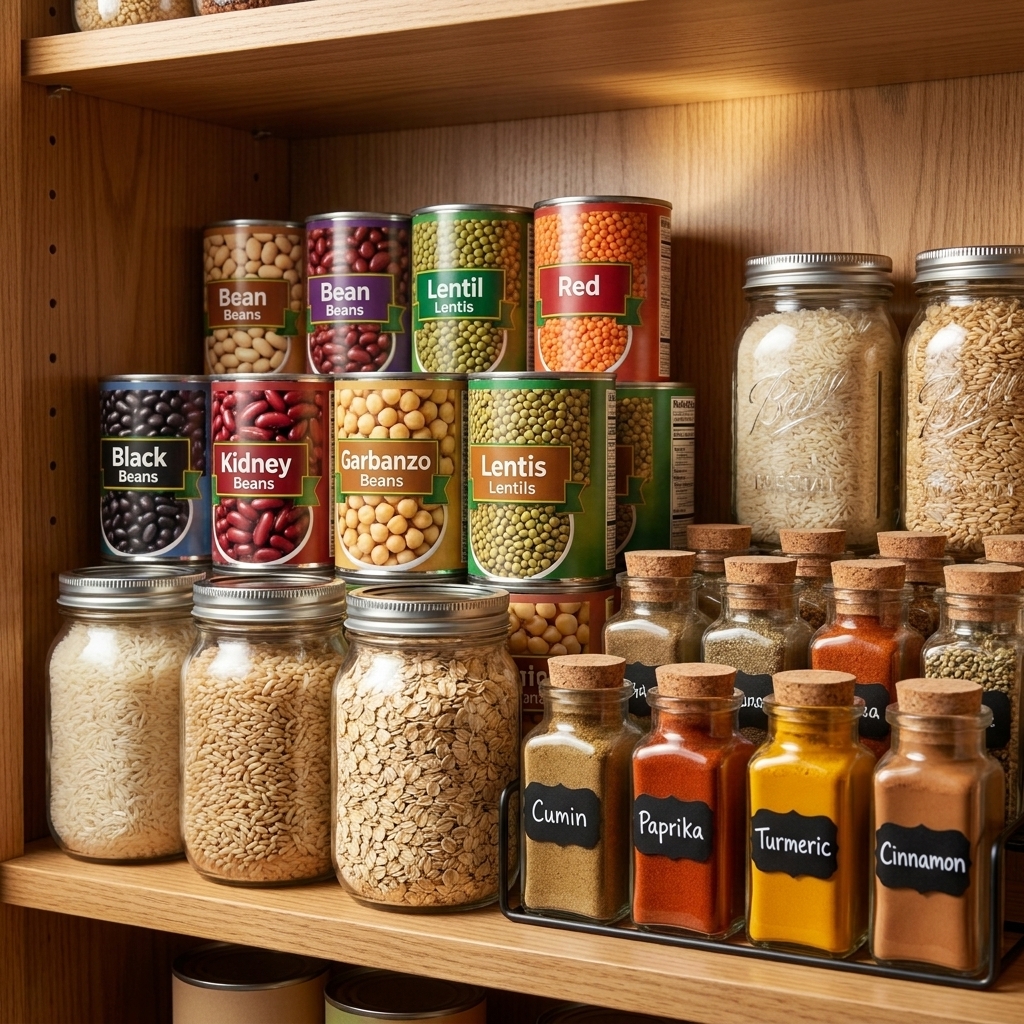
- Pantry: rice, oats, pasta, canned beans, lentils, canned tomatoes, tuna, spices
- Fridge: half-used sauces, aging produce, eggs, yogurt
Build the week around what you already have, especially “almost gone” items like half a bag of spinach or a lonely jar of salsa.
Step 3: Build a tight grocery list
A budget grocery list is simple, no-frills, and powerful. Start with the base plan categories and fill in what you are missing.
Budget staples that pull their weight
- Proteins: eggs, canned tuna or salmon, chicken thighs, ground turkey, tofu, dried or canned beans, lentils, plain Greek yogurt
- Carbs: oats, rice, pasta, potatoes, sweet potatoes, tortillas, frozen corn
- Produce: cabbage, carrots, onions, bananas, apples, frozen berries, frozen mixed veggies, greens (whatever is on sale)
- Healthy fats and flavor: olive oil, peanut butter, nuts or seeds (buy in bulk if possible), salsa, mustard, soy sauce, vinegar, garlic
Shopping rules that save money
- Choose one splurge item. If you love feta or berries, pick one. You do not need five premium extras.
- Use frozen produce strategically. Frozen broccoli, spinach, and berries are often cheaper per serving, especially out of season, and they reduce waste.
- Buy store brands when it makes sense. For staples like oats, rice, canned beans, and frozen vegetables, quality and nutrition are usually comparable. Still, check labels for added sugar or extra sodium.
- Pick versatile ingredients. Cabbage can be slaw, stir-fry, soup, or roasted. Yogurt can be breakfast, sauce, or marinade.
Step 4: Do one focused prep session (60 to 120 minutes)
This is the weekly engine. Put on a podcast, set a timer, and aim for “good enough.” You are building components, not a cooking show.
The simplest prep order
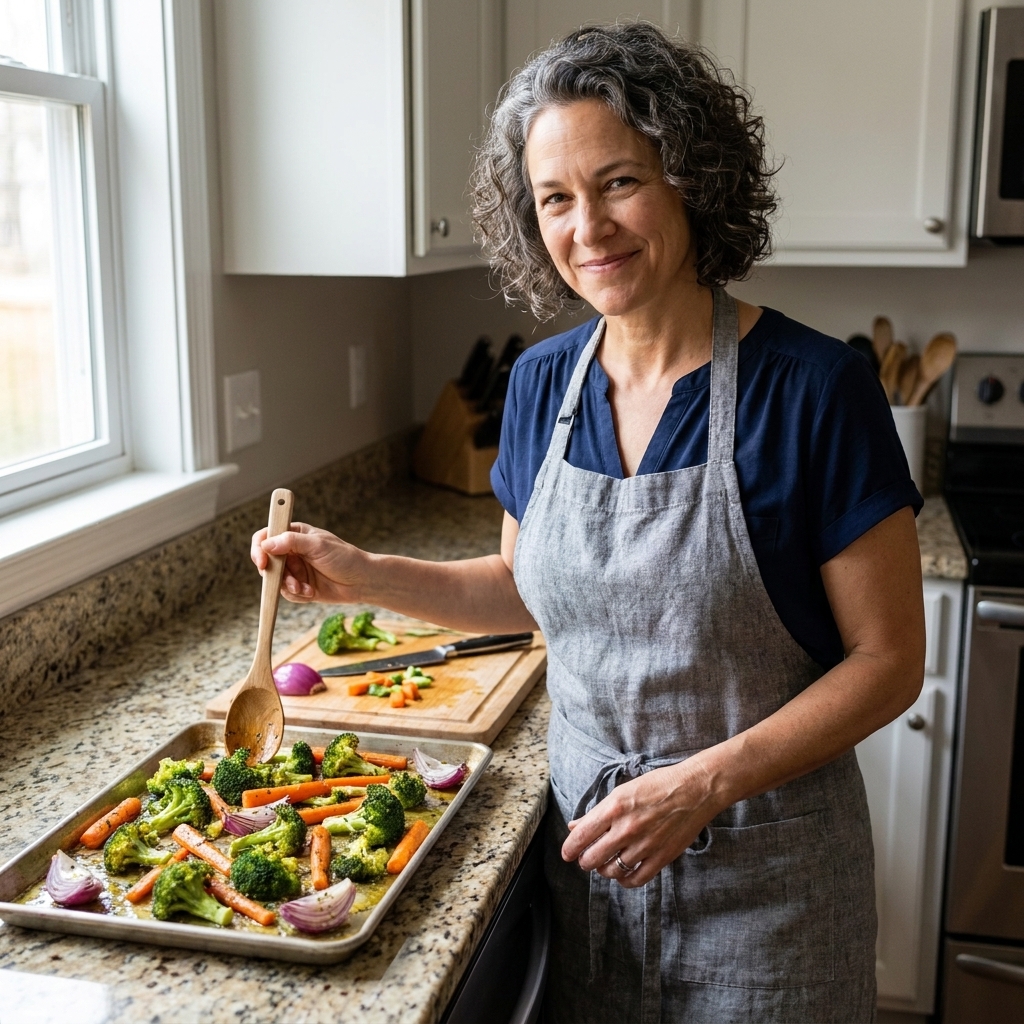
- Start the longest cook first: rice, potatoes, lentils, or a sheet pan of roasted vegetables.
- Layer tasks while things cook: while rice simmers or vegetables roast, cook your protein and chop quick produce.
- Cook your protein: bake, slow cook, sauté, or air-fry.
- Prep quick produce: wash greens, slice onions and peppers, shred carrots, chop fruit.
- Make one sauce: it is the difference between repetitive and satisfying.
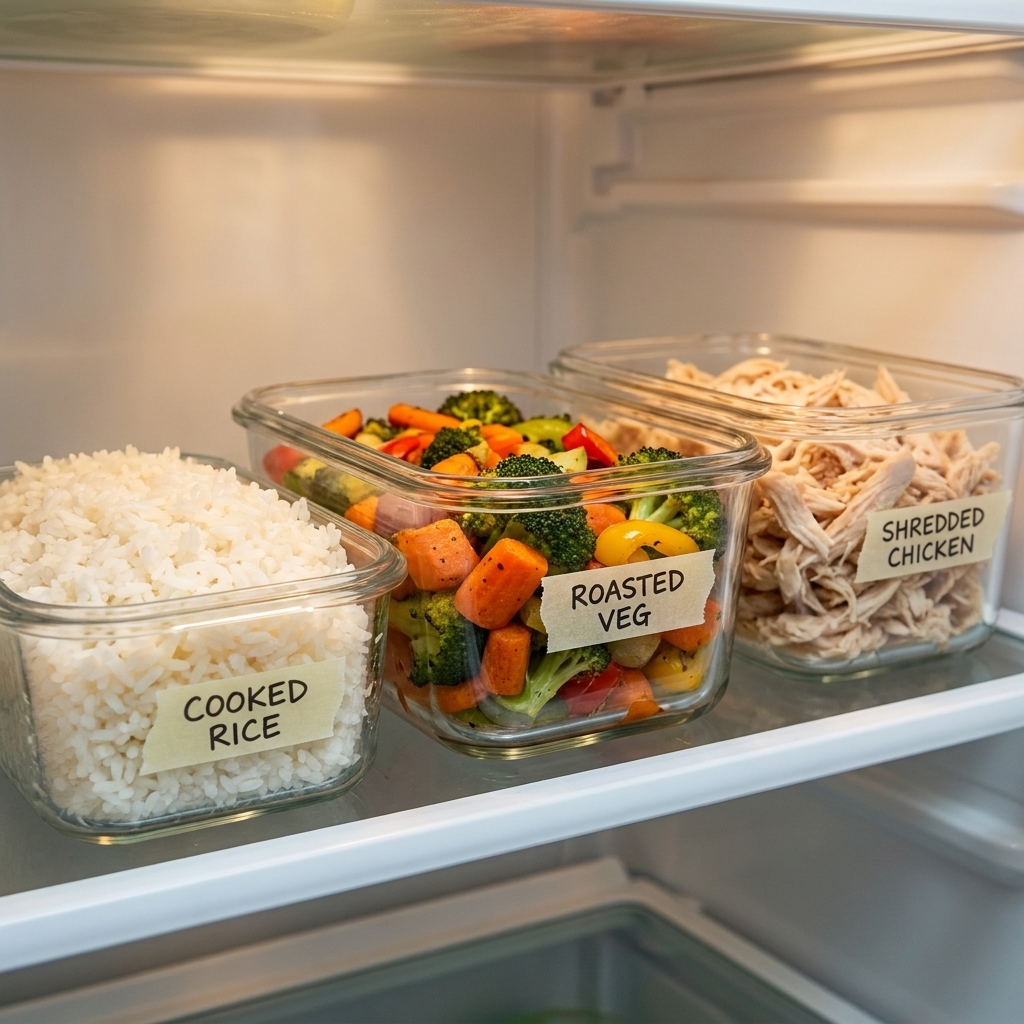
- Portion and label: store components so they are easy to grab.
A budget-friendly bulk cook lineup
- Sheet pan: onions, carrots, broccoli, peppers, or cabbage with olive oil, salt, pepper
- Pot: rice, quinoa, or pasta
- Protein: chicken thighs (often cheaper and more forgiving than breasts), tofu, or ground turkey
- Legume option: lentils simmered with canned tomatoes and spices, or a quick bean salad
Step 5: Use 3 mix-and-match formulas
Instead of deciding what to eat from scratch each day, choose a few formulas that reuse the same ingredients. These keep you on budget because they prevent the last-minute grocery run.
Formula 1: Grain bowl
- Base: rice or quinoa
- Protein: chicken, tofu, beans, or tuna
- Veg: roasted vegetables + something crunchy (cabbage or carrots)
- Flavor: salsa, soy sauce, peanut sauce, or yogurt garlic sauce
Formula 2: Loaded salad
- Base: greens or shredded cabbage
- Protein: lentils, eggs, chicken, or beans
- Carb: leftover sweet potato or a scoop of rice
- Fat: olive oil dressing, avocado if it is affordable, or sunflower seeds
Formula 3: Quick skillet or stir-fry
- Base: frozen mixed vegetables + pre-sliced onions/peppers
- Protein: tofu, ground turkey, or leftover chicken
- Carb: rice, noodles, or tortillas
- Flavor: soy sauce, garlic, ginger, or a jarred simmer sauce (one jar can stretch several meals)
Budget sauces that keep it interesting
When people tell me meal prep is “boring,” it is usually a flavor problem, not a willpower problem. A sauce is also cheaper than buying completely different ingredients.
- Yogurt garlic sauce: plain yogurt + lemon or vinegar + garlic powder + salt
- Peanut sauce: peanut butter + soy sauce + warm water + a little honey or sugar + chili flakes
- Simple vinaigrette: olive oil + vinegar + mustard + salt and pepper
- Taco-style: salsa + lime + cumin
Store sauces separately so your meals do not get soggy.
Food safety and storage
As a nurse, I cannot skip this part. Safe storage protects both your health and your budget. When in doubt, follow USDA guidance and your local public health recommendations.
- Refrigerate promptly: do not leave cooked food at room temperature for more than 2 hours (1 hour if it is very hot).
- Cool foods quickly: portion hot food into smaller containers so it cools faster in the fridge.
- Use the 3 to 4 day guideline: many cooked foods keep well in the refrigerator for about 3 to 4 days. If you are prepping for a full week, freeze extra portions.
- Reheat safely: reheat leftovers until steaming hot. For many foods, 165°F / 74°C is the commonly recommended target.
- Freeze smart: rice, cooked meats, soups, chili, and cooked beans freeze well. Salad greens do not. If you are sensitive to foodborne illness risk, be extra cautious with rice and seafood and keep storage times on the shorter end.
- Label and rotate: put older containers in front so they get eaten first.
What it can cost
Prices vary by region, season, and sales, but here is a realistic way to think about the sample base plan (chicken thighs, lentils, brown rice, sweet potatoes, frozen broccoli, onions/peppers, and a yogurt-based sauce).
- Typical range: about $25 to $45 for the core groceries, depending on where you shop and what you already have (oil, spices, vinegar, soy sauce).
- Servings: that set of ingredients commonly yields roughly 8 to 12 portions when used as mix-and-match components.
- Cost per portion: often lands around $2.50 to $5.50, which is where the savings show up compared to weekday takeout.
If you already have rice, spices, or a sauce base at home, your out-of-pocket cost drops fast.
Basic gear that helps
You do not need fancy containers to make this work. You just need a few basics and a system.
- Nice to have: sheet pan, large pot, skillet, cutting board, sharp knife, basic measuring cup or scoop for portioning.
- Containers: reusable containers are great, but budget options work too: reused glass jars, deli containers, or freezer bags for soups and shredded meat.
- Low-cost upgrade: a roll of masking tape and a marker for labels.
A sample low-cost week
Here is what it can look like in real life. You will notice the ingredients repeat, but the meals do not feel identical.
- Breakfast: oats with frozen berries and peanut butter, or eggs with sautéed peppers and onions
- Lunch 1: chicken rice bowl with roasted broccoli and yogurt garlic sauce
- Lunch 2: lentil salad with chopped cabbage, carrots, and vinaigrette
- Dinner 1: chicken and veggie stir-fry over rice
- Dinner 2: lentil tomato stew with sweet potato
- Backup meal: freezer portion of stew or a quick scrambled egg and rice bowl
Common mistakes
Mistake: Buying aspirational produce
If you consistently throw away fresh spinach or berries, switch to frozen or choose sturdier produce like cabbage, carrots, apples, and oranges.
Mistake: Prepping seven full meals you do not want
Prep components, not perfection. Cook 2 proteins and 2 sides, then assemble different meals with sauces and spices.
Mistake: Skipping snacks, then overspending later
Plan 2 simple snacks: fruit + nuts, yogurt + oats, or hummus + carrots. It is cheaper than vending machine grazing.
Mistake: Underestimating protein
Meals that are mostly carbs and a few vegetables can leave you hungry. Adding beans, eggs, tofu, chicken thighs, or Greek yogurt improves fullness without a huge cost increase.
FAQ
How do I prep for the whole week without food going bad?
Refrigerate about 3 to 4 days of meals and freeze the rest. Soups, stews, cooked beans, rice, and cooked meats freeze especially well. Keep crunchy items and sauces separate until you eat, and refrigerate leftovers promptly.
Is meal prep still healthy with canned and frozen foods?
Yes. Frozen vegetables and fruits can be just as nutritious as fresh, and they reduce waste. For canned items, rinsing beans can reduce sodium, and it helps to compare labels for added sugar or salt.
What is the cheapest high-protein food for meal prep?
It depends on your area, but consistently budget-friendly options include eggs, dried lentils, dried beans, tofu, plain Greek yogurt, and chicken thighs. Canned tuna is also cost-effective for quick lunches.
How can I meal prep if I hate cooking?
Keep it ultra-simple: bake a sheet pan of vegetables, cook a pot of rice, and choose one low-effort protein (rotisserie chicken, canned beans, or tofu). Your “prep” can be mostly assembly.
Can this work for vegetarian, vegan, or gluten-free eating?
Yes. Swap chicken for tofu, tempeh, eggs, or extra beans and lentils. For gluten-free carbs, use rice, potatoes, corn tortillas, or certified gluten-free oats.
A gentle goal to start
If you are new to meal prep, do not aim for a perfect week. Aim for two prepared lunches and one prepared dinner. That alone can reduce stress, improve nutrition, and save money. Once that feels easy, add another batch cook or a freezer meal.
Consistency beats intensity, especially when you are protecting your energy and your budget.