
Use light exposure, consistent wake times, and strategic meal timing to realign your body clock. Practical steps that work in real life, not toxic wellness c...
Calma Path
October 18, 2026
Updated October 18, 2026
10 Evidence-Based Strategies to Crush Sugar Cravings Naturally
Tired of intense sugar cravings? Learn 10 science-backed strategies to steady appetite, reduce emotional triggers, and make sweets feel optional, not irresistible.

Written by
Maya Reynolds
Maya Reynolds is a registered nurse turned wellness educator who specializes in translating clinical research into accessible, everyday health habits. She is passionate about helping people sustainably improve their fitness, sleep, and nutrition without the pressure of toxic wellness culture.
Sugar cravings can feel oddly personal, like a willpower problem. In reality, cravings are usually a mix of biology (blood sugar dips, hunger hormones, sleep debt), environment (hyper-palatable foods everywhere), and psychology (stress, reward, habit loops). The goal is not to “never want sweets again.” It is to make cravings quieter, less urgent, and easier to ride out.
These strategies are practical, grounded in what we know from nutrition and behavior science, and designed to work in real life. Pick two or three to start and build from there.

1) Start with a protein-forward breakfast
If your day starts with mostly refined carbs (think pastries, sweet cereal, toast-only), your blood sugar can rise quickly and then drop, which often fuels mid-morning cravings. A protein-forward breakfast tends to support steadier energy and stronger satiety signals.
Try this
- Aim for a helpful range: Many people feel best with about 20 to 35 grams of protein at breakfast, but smaller appetites and lower energy needs may do well with less.
- Pair protein with fiber and healthy fat for staying power.
- Examples: eggs plus veggies and avocado, Greek yogurt plus berries and nuts, tofu scramble, cottage cheese plus fruit and seeds.
Real-life note: If mornings are chaotic, even “good enough” helps. A ready-to-drink protein shake plus a banana is often a meaningful upgrade from a sugary coffee and nothing else.
2) Build meals around fiber, not just calories
Fiber slows digestion, can blunt glucose spikes, and supports gut signals that influence hunger and fullness. Many people trying to “eat clean” accidentally under-eat fiber by focusing only on protein and low-fat foods.
Try this
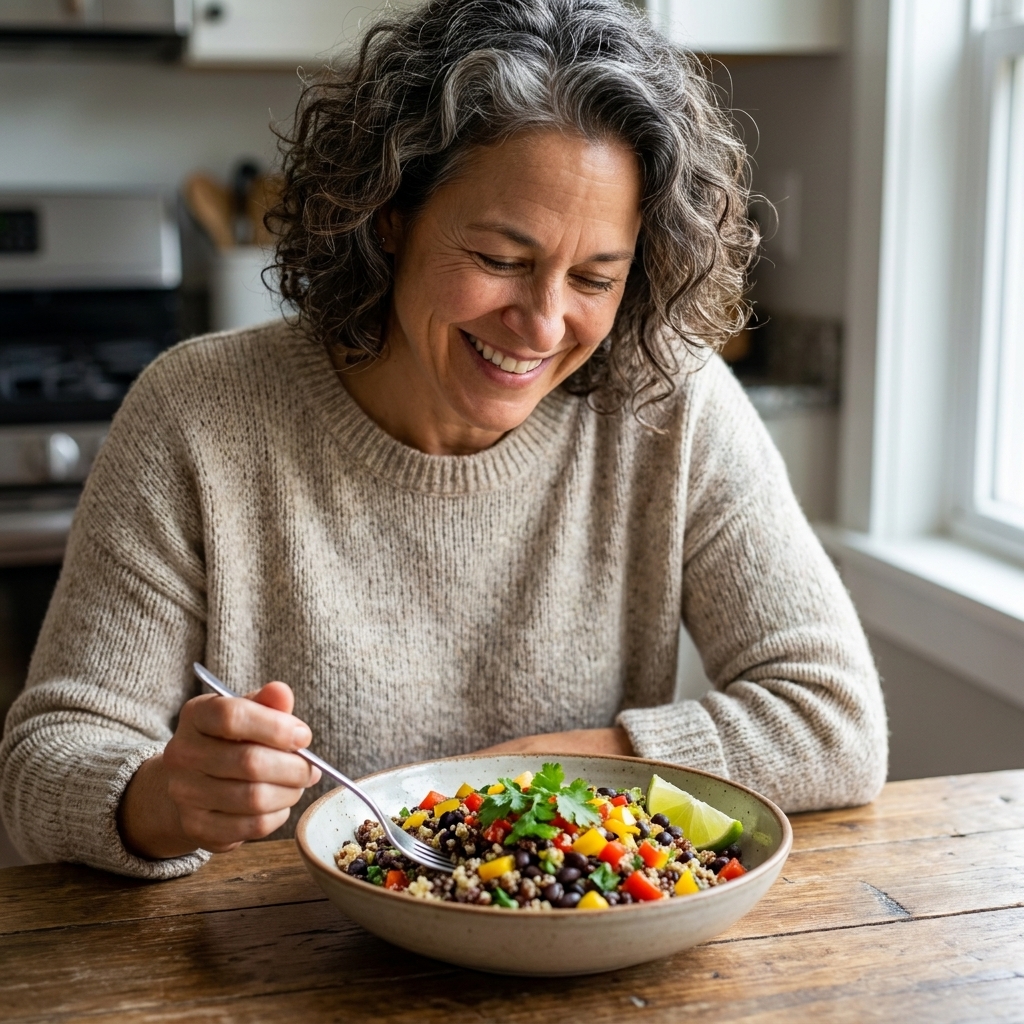
- Include at least one high-fiber food at every meal: beans, lentils, chickpeas, oats, chia, flax, berries, pears, apples, leafy greens, broccoli, Brussels sprouts.
- Choose whole grains you actually enjoy: oats, quinoa, brown rice, barley, whole wheat pasta.
- If you increase fiber, increase water too to avoid GI discomfort.
3) Don’t eat carbs alone
Carbohydrates are not the enemy. But carbs eaten alone, especially refined ones, are more likely to create rapid glucose swings that can amplify hunger later. Pairing carbs with protein, fiber, and fat slows absorption and helps you feel satisfied longer.
Try this
- Instead of fruit alone: fruit plus nut butter or Greek yogurt.
- Instead of crackers alone: crackers plus hummus or tuna.
- Instead of plain pasta: pasta plus chicken or lentils and a big side salad with olive oil.
4) Eat consistently if you tend to under-eat
A very common craving setup is accidental under-eating during the day, then a tidal wave of urges at night. When you wait too long to eat, your brain pushes you toward quick, highly rewarding options. Sugar is a common choice because it tastes like fast relief, even though many carbs can provide quick glucose.
Try this
- If it helps you prevent the “crash and crave” pattern, eat within 1 to 2 hours of waking.
- Then aim for a meal or balanced snack every 3 to 5 hours, adjusting for your schedule, appetite, and activity.
- Keep “craving-proof” snacks visible and easy: jerky, nuts, roasted edamame, cheese sticks, yogurt, apples, hummus, hard-boiled eggs.
5) Treat sleep as a cravings lever
Sleep loss shifts appetite hormones and makes highly palatable foods feel more rewarding. Translation: when you are sleep-deprived, your brain is more likely to seek sugary, high-calorie foods and less likely to feel satisfied.
Try this
- Pick one sleep lever: a consistent wake time, a 30 to 60 minute wind-down, or morning light exposure.
- Keep caffeine earlier in the day if it disrupts sleep for you.
- If evenings are your craving danger zone, an earlier bedtime can be more effective than “trying harder” at night.

6) Use morning light and daily movement
Your circadian rhythm influences sleep quality, appetite regulation, and metabolism. Morning light helps set your body clock, and regular movement improves insulin sensitivity, which may help some people feel more stable with hunger and cravings over time.
Try this
- Get 5 to 10 minutes of outdoor light within an hour of waking (longer on cloudy days).
- Add a 10 to 20 minute walk most days, especially after meals when possible.
- If you cannot walk after meals, any consistent movement is a win: dancing while cooking, stairs, mobility work.
7) Use a “pause and label” ritual
Stress does not just increase cravings. It also narrows your attention and makes quick comfort feel urgent. A simple pause helps bring the thinking part of your brain back online.
Try this
- When a craving hits, pause for 60 seconds.
- Label it: “This feels like stress,” “This feels like fatigue,” or “This feels like habit.”
- Take 5 slow breaths, then choose: eat a planned portion, delay 10 minutes, or switch to a different soothing action.
Soothing swaps that work: a hot shower, a quick stretch, herbal tea, a short walk, texting a friend, or journaling one paragraph. You are not replacing sugar with punishment. You are replacing sugar with real nervous-system support.
8) Make sweets less “special” with planned portions
Restriction often backfires. When a food is framed as forbidden, it can become more mentally loud, and cravings can intensify. For many people, a planned portion approach lowers the emotional charge.
Try this
- Pick 2 to 4 times per week for dessert on purpose, not as a stress reflex.
- Plate it, sit down, and eat it without multitasking.
- Have it after a balanced meal when you can, not on an empty stomach, for steadier appetite afterward.
Key mindset shift: You are practicing being someone who can have sweets and move on. That identity change is powerful.
9) Make your environment do the heavy lifting
Cravings are not only internal. Visibility, convenience, and portion size strongly influence what we eat. This is not a character flaw. It is human behavior.
Try this
- Keep “sometimes foods” less visible: store sweets in an opaque container, on a higher shelf, or outside the kitchen.
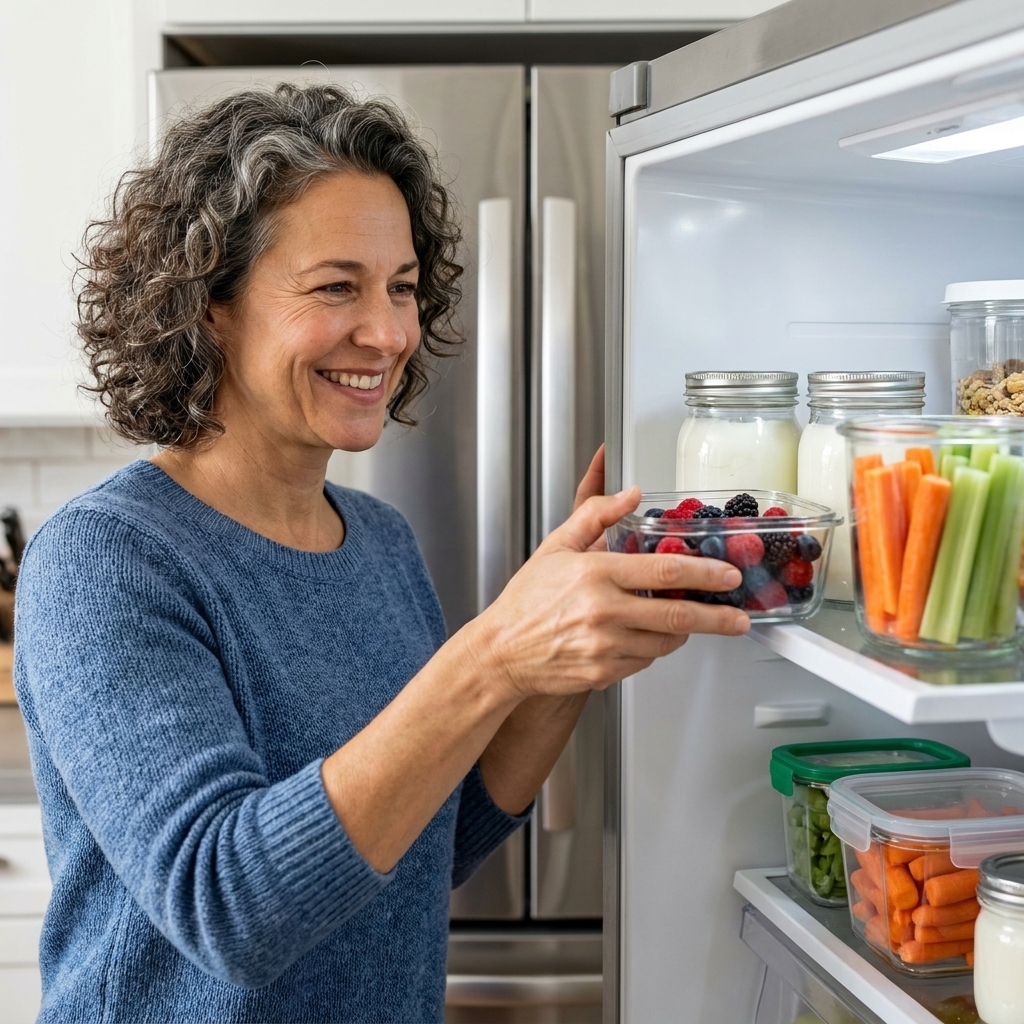
- Make nourishing options frictionless: washed fruit at eye level, yogurt in front, nuts pre-portioned.
- If you love baking, consider baking smaller batches or freezing half immediately.
10) If cravings are intense, check the basics
Sometimes “cravings” are your body asking for something foundational: more overall food, more protein, better sleep, or a less chaotic schedule. Nutrient gaps can also affect energy and appetite cues, though cravings are not a diagnostic tool on their own.
Try this
- Do a quick reality check: Are you skipping meals, eating very lightly, or going long stretches on coffee? Those patterns often inflate cravings later.
- Track protein for 3 days: Just as information. Many active adults, older adults, and people aiming for fat loss or muscle gain do well around 1.2 to 1.6 g/kg/day, but needs vary. If you have kidney disease or medical limitations, defer to your clinician.
- Know the classic deficiency clue: If you crave non-food items (ice, clay, starch), that can be a pica signal and warrants a medical check. For sugar cravings specifically, look first at sleep, stress, meal balance, and overall intake.
- If you have heavy periods, persistent fatigue, hair shedding, restless legs, or frequent dizziness, talk with a clinician about labs like ferritin, CBC, B12, vitamin D, and thyroid markers.
Important: If you have diabetes, prediabetes, a history of eating disorders, or are pregnant, get individualized guidance before making major dietary changes.
Two often-missed triggers
Hydration and alcohol
Mild dehydration can feel like hunger for some people, and evening alcohol can worsen sleep, which can set up stronger cravings the next day.
- Try a simple test: drink a full glass of water and wait 10 minutes before deciding what you want.
- If alcohol is part of your routine, notice whether cravings spike after nights you drink. Even cutting back by one drink or moving it earlier can help sleep quality.
Ultra-processed sweets and “can’t stop” foods
Some foods are designed to be easy to overeat, especially highly processed sweets and snack desserts. If “just keep it in the house and practice moderation” has never worked for you, that is not a moral failure. It is a realistic read of your environment.
- Buy single-serve portions when possible.
- Serve one portion on a plate and put the rest away before you start eating.
- Choose desserts you truly like, not the endless “meh” snacks that keep you grazing.
A simple 7-day plan
If you want structure without a “detox,” here is a gentle week you can repeat.
- Days 1 to 2: Add a protein-forward breakfast.
- Days 3 to 4: Add one high-fiber food to lunch and dinner.
- Day 5: Commit to a 10-minute walk after one meal.
- Day 6: Choose one planned dessert portion and eat it mindfully.
- Day 7: Do a quick environment reset: move sweets out of sight, put nourishing snacks at eye level.
FAQ
Why do I crave sugar at night?
Night cravings commonly reflect a mix of daytime under-eating, stress decompression, habit (your brain expects a reward), and fatigue. Start by checking: did you eat enough protein and fiber earlier? Are you getting enough sleep? Then use planned desserts or a soothing routine to break the stress-reward loop.
Is fruit “too much sugar” if I have cravings?
For most people, fruit helps rather than hurts because it comes packaged with fiber, water, and micronutrients. Pair fruit with protein or fat if it tends to leave you hungrier.
Do chromium, magnesium, or supplements stop sugar cravings?
Supplements can help when a true deficiency exists, but they are rarely the main fix. Chromium research is mixed. Magnesium may support sleep and stress for some people, which can indirectly help cravings, but it can also cause GI side effects in some forms and doses. If you want to try a supplement, keep it simple, avoid megadoses, and run it by your clinician, especially if you take medications.
The bottom line
You do not need a cleanse, a ban list, or expensive “metabolic” products to feel calmer around sugar. Most cravings soften when you stabilize meals with protein and fiber, protect sleep, lower stress load, and make your environment work with you instead of against you.
If you want one place to start: eat a protein-forward breakfast tomorrow and take a 10-minute walk after one meal. Small, repeatable habits are where the real change happens.