
A science-informed way to build a wellness routine that lasts: attach small health habits to existing daily actions so they start to feel automatic.
Calma Path
October 18, 2026
Updated October 18, 2026
The 2-Minute Rule for Daily Exercise
Use the 2-minute rule to make daily movement automatic. Learn how to pick a tiny starter workout, reduce friction, and build consistency without relying on willpower.

Written by
Maya Reynolds
Maya Reynolds is a registered nurse turned wellness educator who specializes in translating clinical research into accessible, everyday health habits. She is passionate about helping people sustainably improve their fitness, sleep, and nutrition without the pressure of toxic wellness culture.
When I was working hospital shifts, the hardest part of exercise was almost never the workout itself. It was the start. After a long day, my brain could come up with a dozen reasonable-sounding excuses in under ten seconds. If you relate, the two-minute rule can be a game-changer.
The idea is simple: make the habit so small you cannot talk yourself out of beginning. Two minutes is not the goal. Two minutes is the gateway that makes showing up automatic, so the rest can happen more often.

What the 2-minute rule means
The two-minute rule is a habit-building tactic popularized by James Clear and other writers: when you start a new habit, scale it down to something that takes about two minutes. The point is to make the habit easy to begin, even on low-energy days.
For exercise, this helps because:
- Starting is often the bottleneck. Once you are moving, motivation can rise to meet you.
- It can feel less overwhelming. Big, vague goals often trigger avoidance. Tiny, specific actions feel doable.
- It builds identity. You stop debating whether you are “an exerciser” and start collecting daily proof that you show up.
Consistency is not about being intense. It is about being reliable.
Step 1: Pick a 2-minute starter
Your two-minute rule needs one job: get you into motion with almost zero negotiation. The best starters are specific, easy, and repeatable.
Good 2-minute starters (pick one)
- Put on workout clothes and do 10 deep breaths standing tall.
- Walk outside and go to the end of the driveway or hallway and back.
- Do one set: 5 squats + 5 wall push-ups + 10-second plank.
- Mobility micro-routine: 3 cat-cows + 3 hip hinges + 3 shoulder rolls each way.
- Bike or treadmill: start the machine and move at an easy pace for 2 minutes.
What to avoid
- Anything that requires a big setup (finding equipment, searching for a video, rearranging furniture).
- Anything that feels like a test (a “max” anything, a punishing finisher, a complicated routine).
- Anything vague (“work out more,” “do cardio”). Vague goals invite debate.
If you are thinking, “Two minutes cannot possibly matter,” I get it. But this is about engineering the starting line.
Also, think of your starter as what “counts” for your exercise habit that day. It is your proof of showing up.
Step 2: Set an if-then trigger
Tiny habits stick better when they are attached to something you already do. In research, these are often called implementation intentions (a concept associated with psychologist Peter Gollwitzer): If X happens, then I do Y.
Keep it painfully concrete:
- If I start my morning coffee, then I do my 2-minute mobility routine.
- If I brush my teeth at night, then I do 2 minutes of gentle stretching.
- If I shut down my laptop after work, then I walk for 2 minutes.
Pick a trigger that happens almost every day. For most people, consistency loves predictability.

Step 3: Lower the friction
In healthcare, I learned the hard way that willpower is not a reliable resource. Your environment does a lot of the heavy lifting.
Make it easier to do the habit than to skip it
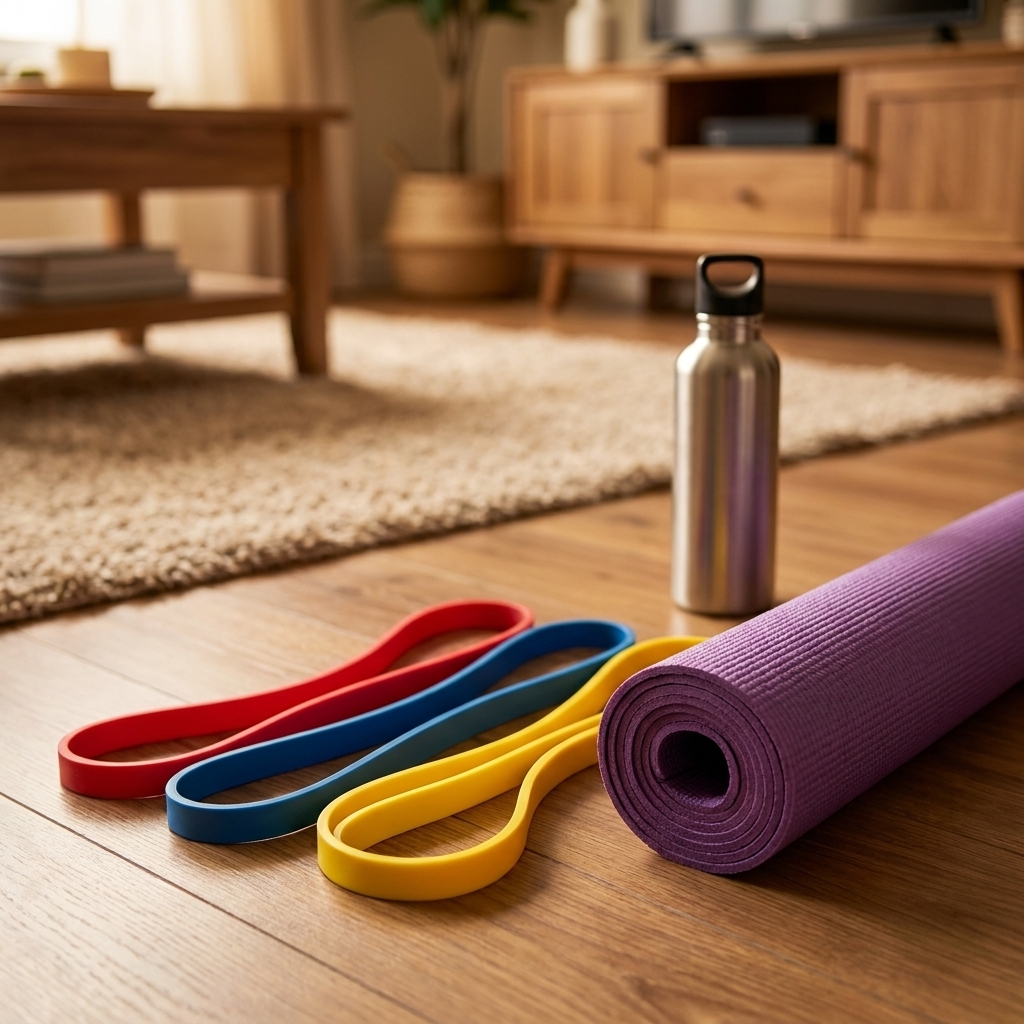
- Set out your gear. Shoes by the door. Mat unrolled. Resistance band on the couch.
- Remove micro-barriers. Pre-download the playlist. Keep a water bottle filled. Charge your headphones.
- Create a default path. The first thing you see after your trigger should be your starter.
- Lower the activation energy. Choose movements that do not require a long warm-up.
A quick self-check: if your two-minute habit requires you to search for something, decide between options, or open five tabs, it is too complicated.
One important note: the starter can be low-barrier, but harder sessions still deserve an appropriate warm-up. The goal here is to make beginning easy, not to skip smart preparation.
Step 4: Do 2 minutes, then decide
This is the part that makes skipping harder. Your agreement with yourself is:
I will do 2 minutes. After that, I am allowed to stop with zero guilt.
That last phrase matters. The brain resists feeling trapped. When you remove the pressure to continue, starting becomes easier, and continuing becomes more likely.
On some days, you will stop at two minutes. That is not failure. That is you protecting the streak, reinforcing identity, and keeping the habit alive through real life.
Step 5: Build a ladder
If you only ever do two minutes, you still win because you are consistent. But many people find that once the start is automatic, they naturally do more. Planning for that makes it easier to expand without overthinking.
Create three rungs
- Rung 1 (Minimum): 2 minutes. Non-negotiable.
- Rung 2 (Standard): 10 minutes. Your most-days workout.
- Rung 3 (Bonus): 20 to 40 minutes. Your energy-is-good option.
Examples:
- Walk ladder: 2 minutes outside, 10-minute brisk walk, 30-minute walk with hills.
- Strength ladder: 1 set, 3 rounds, full session with warm-up and cooldown.
- Mobility ladder: 2-minute flow, 10-minute joint routine, 25-minute yoga class.
The key is that you never “fail” a day. You just choose a rung.
Make it feel rewarding
We repeat what feels good or what feels meaningful. Rewards do not have to be expensive or food-based. They just need to reinforce, “I am the kind of person who shows up.”
- Immediate reward: a hot shower, a relaxing playlist, stepping outside for sunlight.
- Emotional reward: a quick check mark on a calendar, a one-line note like “I kept my promise.”
- Social reward: text a friend “2 minutes done” or share a streak with a low-pressure buddy.
One of my favorites: pair your two-minute movement with morning light. Getting bright light early in the day can help support circadian alignment, and it can make the habit feel like a reset, not a chore.
When it still feels hard
If you keep forgetting
Your trigger is not anchored enough. Attach the habit to something you never skip (bathroom, coffee, feeding the dog) and put a visual cue where you will see it.
If two minutes feels too hard
That is a sign the starter is still too big or too uncomfortable. Shrink it further: put on shoes and stand outside for 30 seconds. Do 3 squats. Do one stretch. The win is showing up.
If you do two minutes but never more
That is okay, but if you want growth, set a gentle default: “After two minutes, I will continue for one more song.” Music is a surprisingly effective timer because it feels finite.
If you get stuck in all-or-nothing thinking
Try this reframe: Two minutes is not a workout. Two minutes is a vote for the person you are becoming. You are practicing reliability, not proving toughness.
Starters for different goals
The best starter depends on what you want, and what your body tolerates well right now.
- If you sit a lot: 2 minutes of brisk walking in place, plus 3 shoulder rolls each way.
- If your goal is strength: 1 easy set of a familiar move (squats to a chair, wall push-ups, band rows).
- If your goal is cardio: 2 minutes at a conversational pace (walk, bike, easy step-ups).
- If you have chronic pain or are deconditioned: choose the gentlest possible version and treat the win as “I moved safely.” When in doubt, get guidance from a clinician or physical therapist you trust.
- If you are already fit: keep the starter embarrassingly easy anyway. This is a consistency tool, not a performance test.
Sample 7-day plan
If you want a simple starting point, here is a week you can repeat. Keep the minimum at two minutes, and take the standard or bonus rung when you have the bandwidth.
- Day 1: 2-minute walk outside
- Day 2: 2-minute mobility (spine, hips, shoulders)
- Day 3: 2-minute strength starter (squats, wall push-ups, plank)
- Day 4: 2-minute walk
- Day 5: 2-minute mobility
- Day 6: 2-minute strength starter
- Day 7: 2-minute easy movement of your choice, keep it gentle
This is intentionally boring. Boring is sustainable. You can make it more exciting once it is automatic.
Safety and self-trust
If you are returning to exercise after injury, surgery, pregnancy, or a long break, tiny starts are especially smart, but your choices should match your body and medical guidance.
If you feel pain that is sharp or worsening, dizziness, faintness, chest pain or pressure, or unusual shortness of breath, stop and seek medical advice. If symptoms are severe or sudden, seek urgent medical care.
For everyone else: think of the two-minute rule as a way to rebuild trust with yourself. You are not trying to dominate your body. You are practicing a daily relationship with movement.
FAQ
Does the two-minute rule work for exercise?
It works best for the hardest part of most routines: getting started. When the start is easy, you do it more often, and frequency is a major driver of habit formation. Over time, your starter can lead to longer sessions naturally.
Is two minutes enough to improve fitness?
Two minutes alone will not maximize fitness. But it can protect consistency, and consistency is what eventually builds fitness. Think of two minutes as the minimum effective dose for showing up, not the final program.
What if I miss a day?
Restart the next day with the smallest possible version. The goal is not perfection. The goal is fast recovery. In my experience, the people who succeed long-term are not the ones who never miss. They are the ones who do not turn a miss into a month.