
A science-backed breakdown of what to do before and after workouts to support performance and readiness, with simple warm-up and cool-down routines.
Calma Path
October 18, 2026
Updated October 18, 2026
7 Mobility Exercises to Undo a Day of Sitting
A simple, research-supported mobility routine for desk workers: loosen hips, open the chest, restore upper back motion, and feel better in 10 to 15 minutes a day.

Written by
Maya Reynolds
Maya Reynolds is a registered nurse turned wellness educator who specializes in translating clinical research into accessible, everyday health habits. She is passionate about helping people sustainably improve their fitness, sleep, and nutrition without the pressure of toxic wellness culture.
If you work at a desk (or drive a lot, or binge a show after work), your body is basically practicing one position for hours: hips flexed, spine rounded, shoulders drifting forward, glutes asleep on the job. I lived this during my nursing years too, just in a different flavor: long charting sessions, breakroom slumps, and then collapsing at home.
The good news is you do not need an extreme stretching program or fancy gear to feel better. What helps most is frequent, gentle mobility that moves your joints through comfortable ranges, reminds your muscles to share the workload, and counterbalances the postures you repeat all day.
Below are seven research-supported, widely used mobility exercises that target common sitting-related patterns: tight hip flexors, stiff thoracic spine, limited ankle motion, and cranky shoulders. I will also show you how to turn them into a quick daily routine.
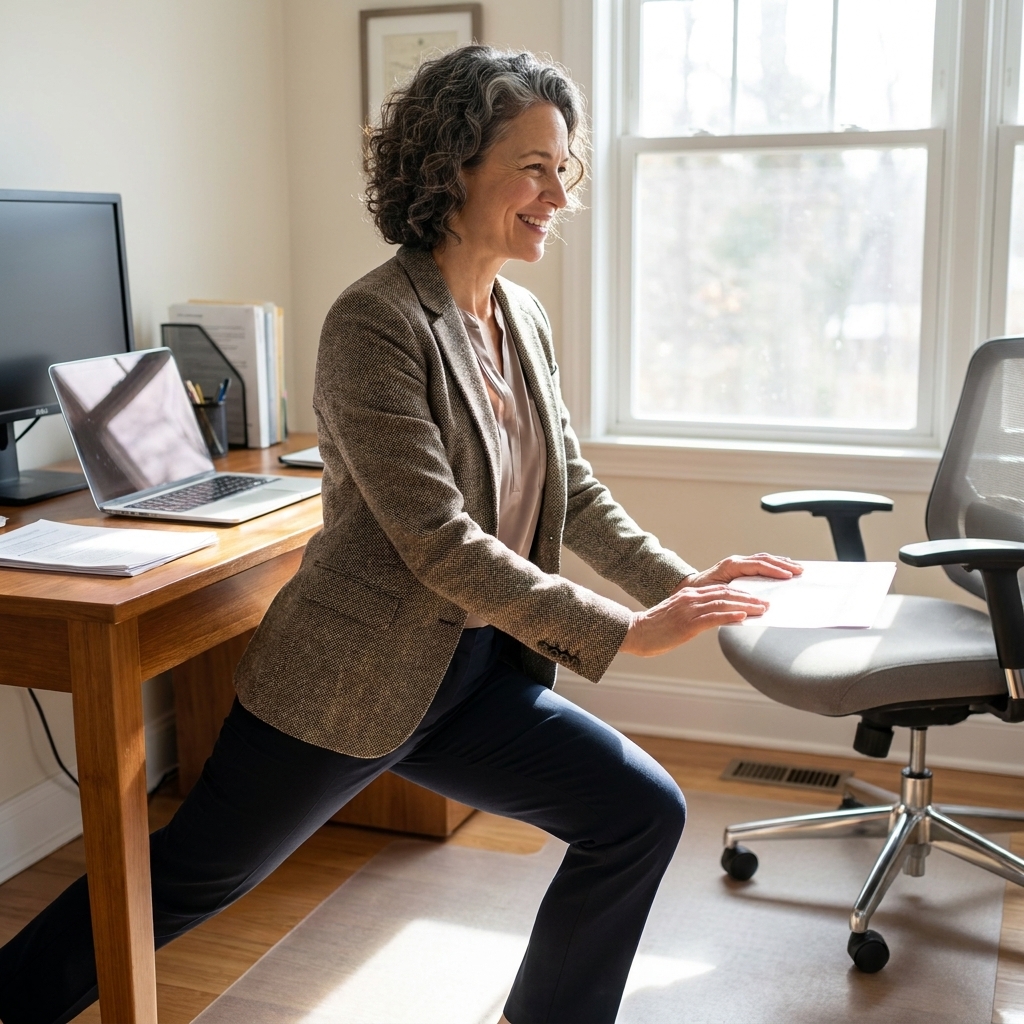
Why sitting feels stiff
Prolonged sitting tends to do three things:
- Reduces joint motion simply because you are not using it much (especially hips, thoracic spine, and ankles).
- Overworks certain muscles (hip flexors, chest, upper traps) while others contribute less (glutes, deep core, mid-back).
- Shifts your “default” posture over time, which can increase strain during workouts or daily tasks.
Mobility work sits in the sweet spot between stretching and strength: you are moving and controlling end ranges. Research broadly supports movement breaks plus mobility work for improving range of motion and perceived stiffness, especially when paired with a little strengthening.
My practical rule: If you sit for hours, you need two things: small movement snacks during the day, and a short daily reset that takes your joints through the motions they did not get.
How to use this list
You can do these as a 10 to 15 minute circuit once a day, or pick 2 to 3 moves as movement snacks between meetings.
- Intensity: Stay at a 3 to 6 out of 10 stretch or effort. Mobility should feel relieving, not punishing.
- Breath: Slow breathing helps downshift muscle guarding. Exhale on the hard part.
- Progress: Aim for smoother motion first, then range of motion, then light load (like a band or small weight) later.
One more expectation setter: you may feel looser within minutes, but lasting change usually takes consistent practice over a few weeks.
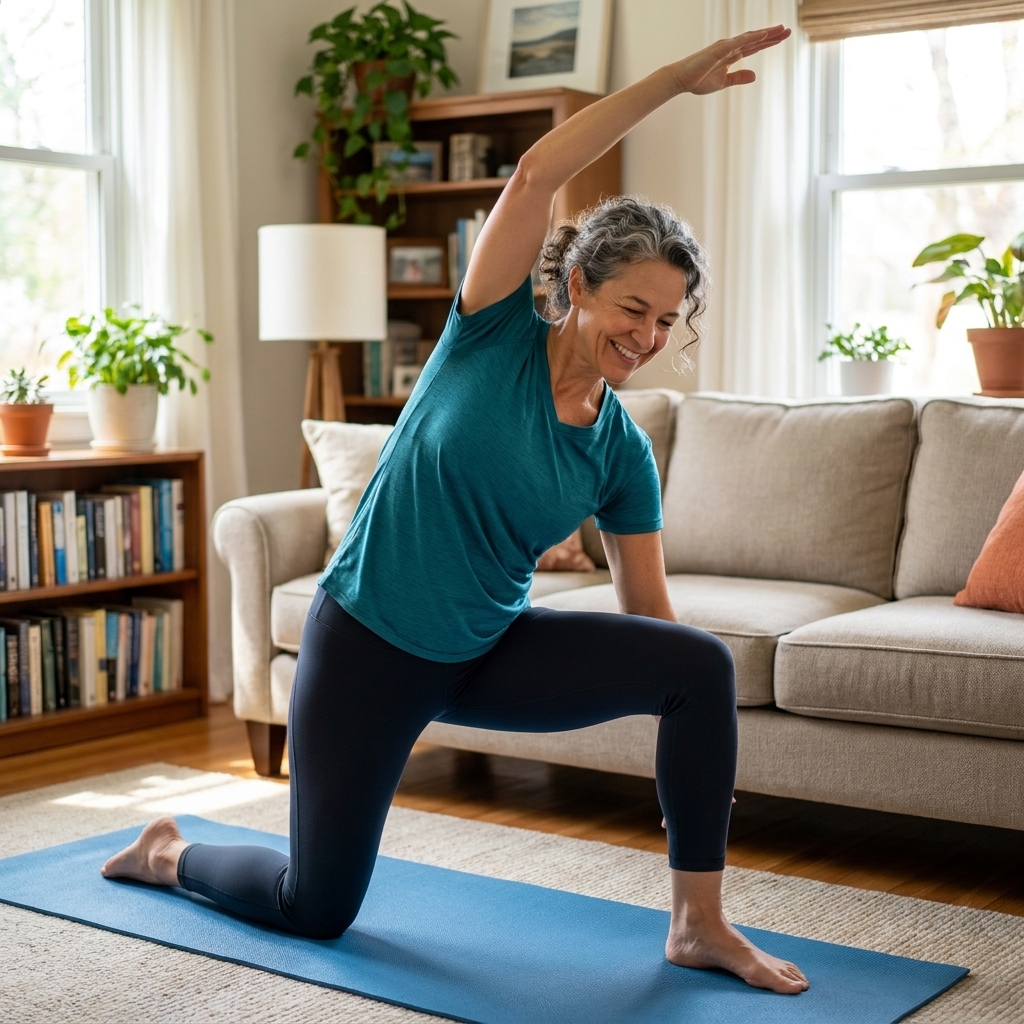
1) Half-kneeling hip flexor stretch
Why it helps: Sitting keeps your hips in flexion. Hip flexors can feel tight, and that can tug on your pelvis and low back. A half-kneeling position lets you target hip extension while keeping the spine quiet.
How to do it:
- Kneel with one knee down and the other foot in front (like a lunge).
- Gently tuck your pelvis under (think zip up your lower belly and tailbone toward the floor).
- Squeeze the glute on the kneeling-leg side.
- Shift your body forward a few centimeters until you feel a stretch in the front of the hip.
- Optional: raise the arm on the kneeling-leg side and side-bend slightly away.
Dose: 30 to 45 seconds each side, 1 to 2 rounds.
Common mistake: Arching the low back to fake hip extension. The tuck and glute squeeze are the whole point.
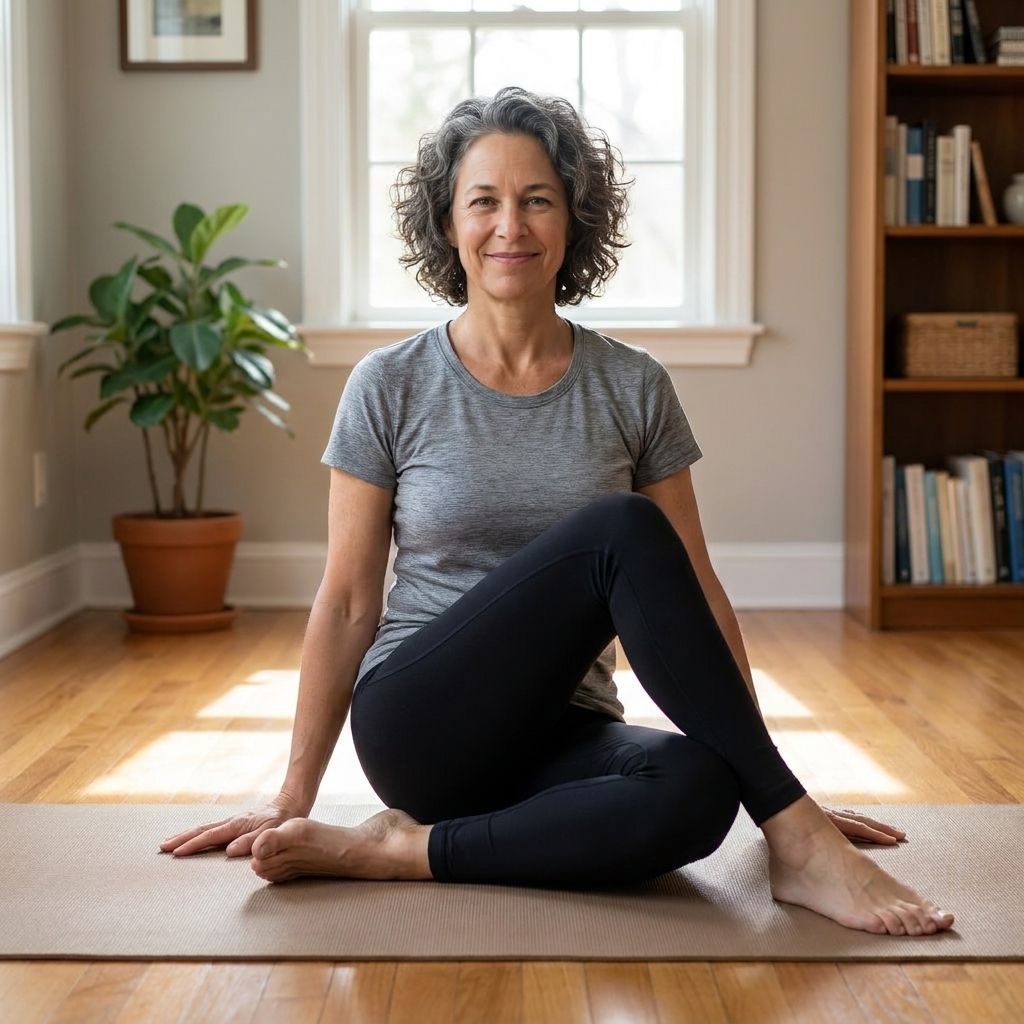
2) 90/90 hip switches
Why it helps: Many desk workers lose comfortable hip rotation, which matters for walking, squatting, and back comfort. Controlled hip rotation work is a mobility staple because it trains range plus control.
How to do it:
- Sit on the floor with one leg in front and one leg out to the side, both knees bent around 90 degrees.
- Sit tall if you can. Use your hands behind you for support if needed.
- Slowly rotate your knees to the other side, keeping your feet on the floor, landing in the mirrored 90/90 position.
- Pause, breathe, and repeat.
Dose: 6 to 10 switches total, slow and controlled.
Make it easier: Lean back on your hands and keep the range smaller.
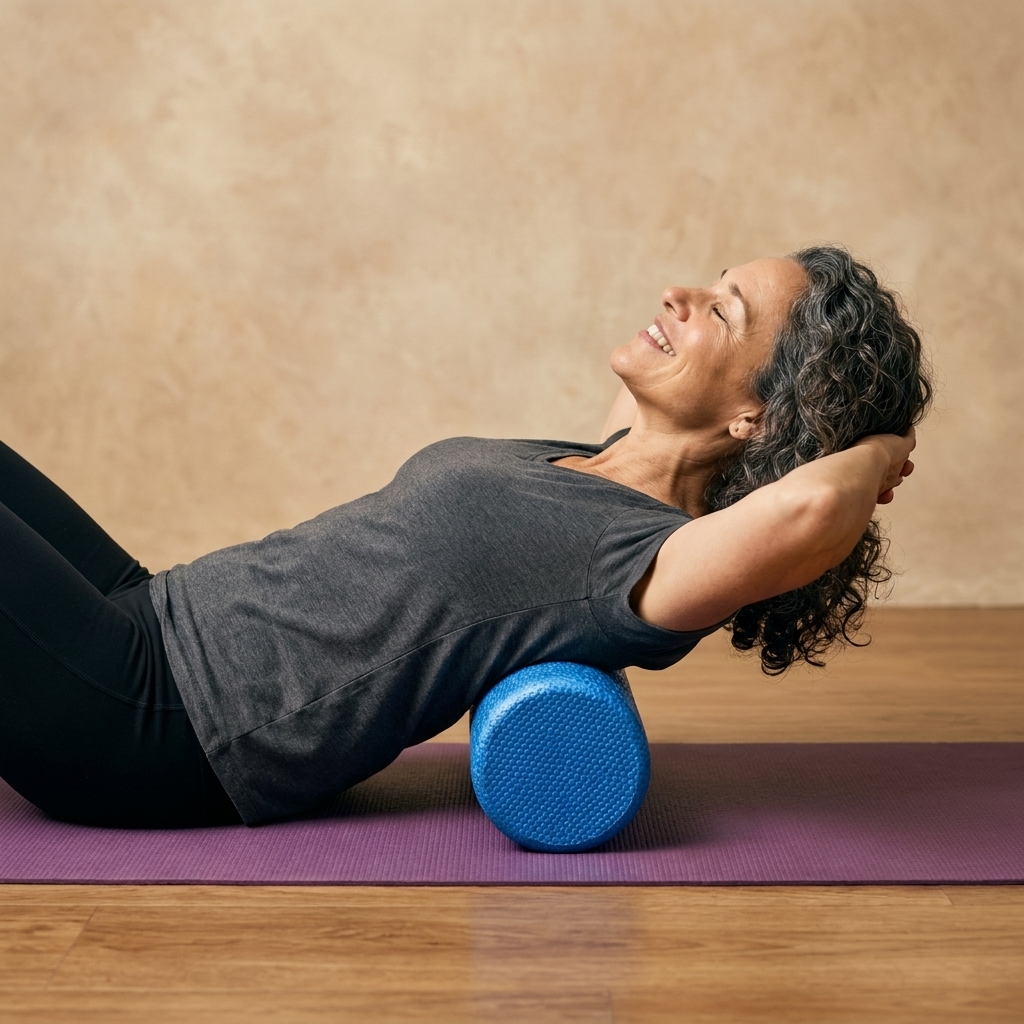
3) Thoracic extension over roller
Why it helps: Sitting often locks you into thoracic flexion (rounded upper back). Restoring thoracic extension can reduce neck and shoulder strain and make overhead movement feel smoother.
How to do it:
- Place a foam roller across your upper back (mid-back, not low back). Support your head with your hands.
- Keep your ribs gently down (avoid flaring).
- Take a slow breath in, and as you exhale, gently extend over the roller.
- Return to neutral and move the roller slightly up or down to find stiff spots.
Dose: 6 to 8 slow reps, 1 to 2 positions along the upper back.
If you do not have a roller: A tightly rolled bath towel works surprisingly well.
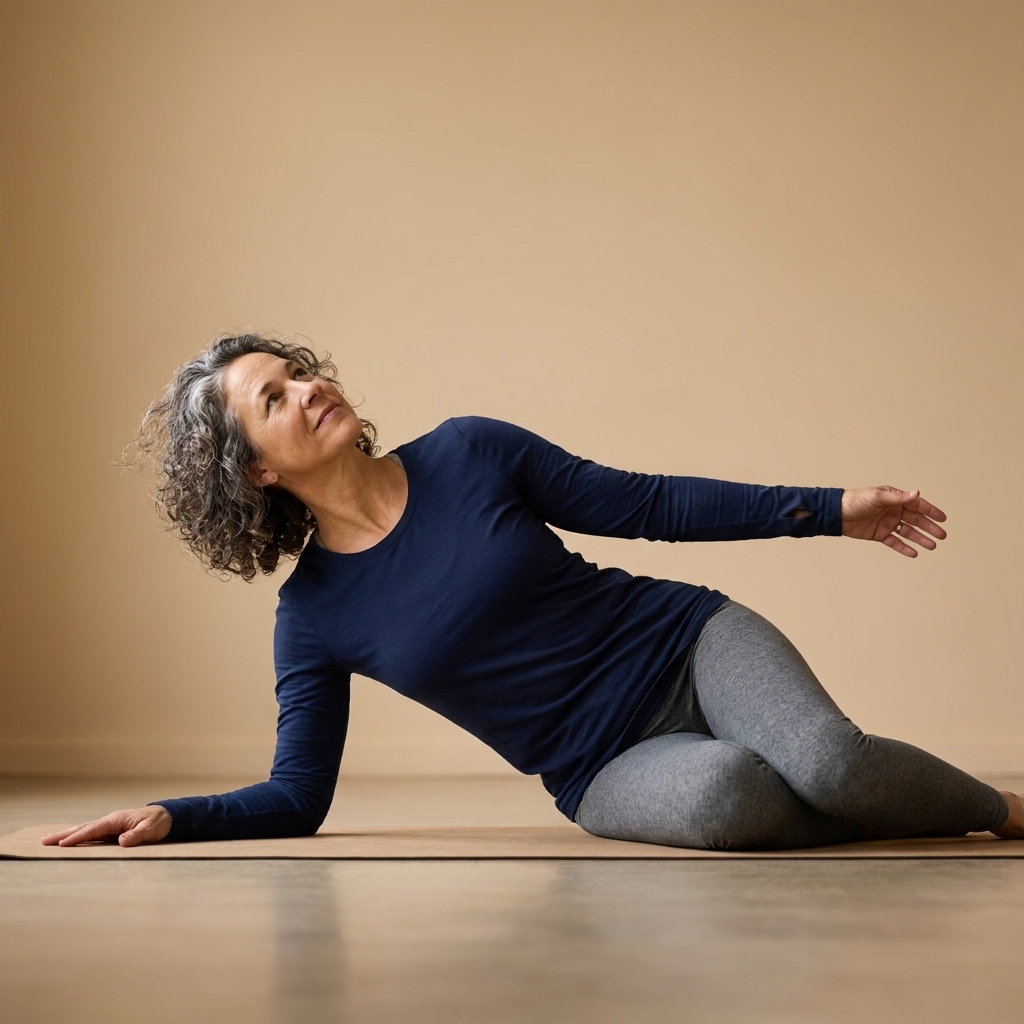
4) Open book rotation
Why it helps: Desk posture can reduce trunk rotation, which your spine needs for comfortable daily movement. Side-lying rotation is joint-friendly and breath-supported.
How to do it:
- Lie on your side with hips and knees bent. Stack knees together.
- Reach both arms straight out in front, palms together.
- Inhale. As you exhale, sweep the top arm open like a book, rotating your upper back and letting your chest face toward the ceiling.
- Keep knees together. Follow your hand with your eyes.
- Pause for one breath, then return.
Dose: 5 to 8 reps per side.
Tip: Place a pillow between knees if your low back feels twisty.
5) Wall slides
Why it helps: Forward shoulders and a stiff upper back can make reaching overhead or sitting tall feel hard. Wall slides encourage upward rotation of the shoulder blade and activate the mid-back, which helps posture endurance.
How to do it:
- Stand with your back near a wall, feet a few inches out.
- Lightly tuck your ribs so you are not arching your low back.
- Place forearms and hands on the wall at about shoulder height.
- Slide arms up slowly as far as you can without shrugging or losing rib position.
- Slide down with control.
Dose: 8 to 12 reps.
Common mistake: Turning it into a neck shrug. Keep shoulders away from ears.
If wrists or shoulders do not like the wall: Do floor slides lying on your back with elbows bent at 90 degrees, sliding arms overhead while keeping ribs down.

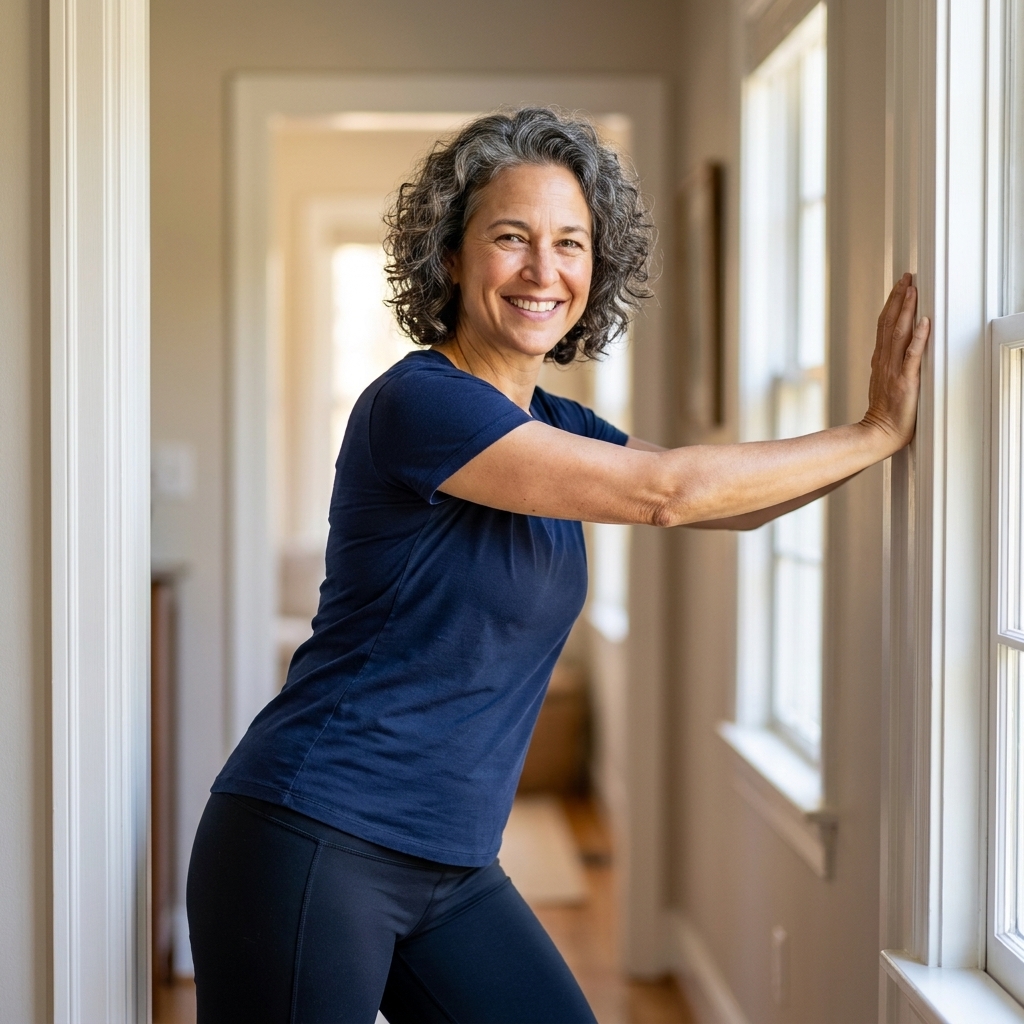
6) Doorway pec stretch
Why it helps: Hours of keyboard and phone time can tighten the chest, pulling shoulders forward. A pec stretch can feel instantly opening, especially when paired with a mid-back activation move like wall slides.
How to do it:
- Stand in a doorway and place your forearm on the door frame, elbow around shoulder height.
- Step through slightly until you feel a stretch across the chest and front shoulder.
- Keep your shoulder blade gently down and back (no yanking).
- Breathe slowly.
Dose: 20 to 40 seconds per side.
Safety note: If you feel sharp pain at the front of the shoulder or tingling down the arm, back off and choose a lower angle.
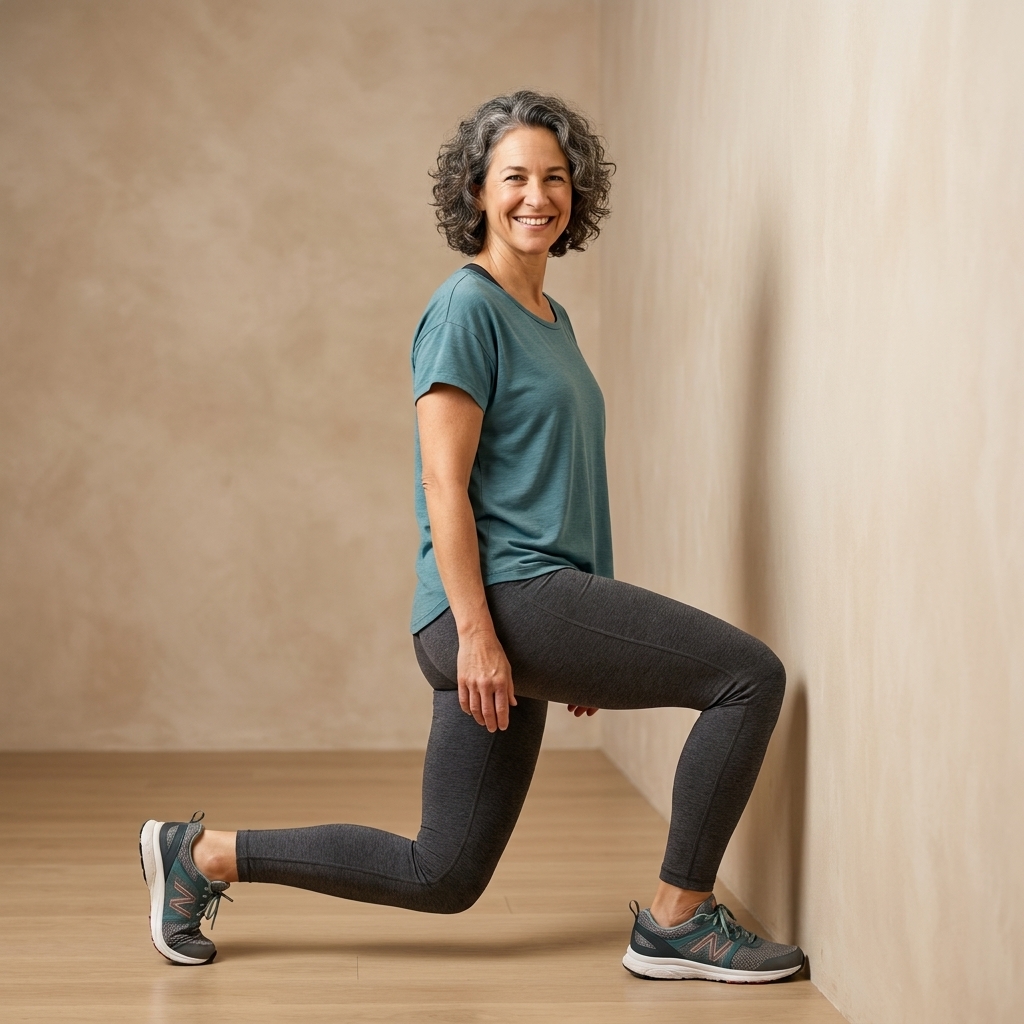
7) Ankle dorsiflexion rocks
Why it helps: A more sedentary day can contribute to stiff calves and limited ankle motion for some people. Poor dorsiflexion can show up as tight calves, cranky knees, or a squat that feels impossible. Improving ankle mobility also supports walking mechanics.
How to do it:
- Stand facing a wall with one foot a few inches away.
- Keep the heel down and gently drive the knee toward the wall.
- Tap the knee lightly to the wall if you can, then rock back.
- Adjust the distance so it is challenging but controlled.
Dose: 10 to 15 rocks per side.
Tip: Track the knee over the second and third toes, not collapsing inward.
Your 10-minute reset
If you want one simple routine, here is my favorite order. It moves from hips to spine to shoulders to ankles, and it is easy to remember.
Option A: 10 minutes daily
- Half-kneeling hip flexor stretch: 40 seconds each side
- 90/90 hip switches: 8 total
- Thoracic extension over roller: 6 reps
- Open book rotation: 6 reps each side
- Wall slides: 10 reps
- Doorway pec stretch: 30 seconds each side
- Ankle rocks: 12 each side
Optional: add 2 minutes of strength
If you have time, pair mobility with one of these simple finishers:
- Glute bridge hold: 2 sets of 20 to 30 seconds
- Band pull-aparts (or a towel pull-apart): 2 sets of 10 to 15
- Calf raises: 2 sets of 10 to 15, slow up and slow down
Option B: movement snacks
Set a timer for every 60 to 90 minutes and do 1 to 2 minutes of movement. For example:
- Hip flexor stretch (one side), then switch next break
- Wall slides x 8
- Ankle rocks x 10 each side
These micro-doses matter because sitting is not a one-time exposure. It is repeated all day.
Make it work in real life
If your low back hurts when stretching
Choose positions that keep your spine neutral and supported. The half-kneeling hip flexor stretch (with the pelvic tuck) and open book rotation are usually better tolerated than aggressive backbends. With thoracic extension work, keep it in the mid-back and avoid letting the low back do the bending.
If your wrists or knees are sensitive
Use a folded towel under the kneeling knee, or do the hip flexor stretch standing with your back foot on a chair. For wrist discomfort, avoid long holds on hands and choose standing options like wall slides or the floor-slide variation.
If you only have 3 minutes
- Hip flexor stretch: 30 seconds each side
- Open book: 4 reps each side
- Wall slides: 8 reps
Consistency beats the perfect routine you never do.
When to get medical guidance
Mobility work should feel like relief or mild effort. Pause and talk with a qualified clinician if you have:
- New, worsening, or persistent pain that does not improve with gentle movement
- Numbness, tingling, or weakness into an arm or leg
- Recent injury, surgery, or unexplained swelling
- Dizziness or shortness of breath with simple movements
FAQ
How often should I do mobility if I sit all day?
Most people feel best with 5 to 10 minutes daily, plus brief movement breaks every 60 to 90 minutes. If daily is too much right now, aim for 3 days per week and build from there.
Is stretching enough to fix my posture?
Stretching helps, but posture is mostly an endurance and habit issue. Pair gentle stretching with activation (like wall slides) and frequent posture interrupts during the day.
Should I do these before or after workouts?
Either works. Before workouts, keep it dynamic and light (fewer long holds). After workouts or before bed, longer breathing-focused holds can feel great.
The bottom line
Sitting is not a personal failure. It is a modern reality. Your body just needs a daily reminder that it was designed to move in more than one shape.
If you try only one thing from this article, make it this: do the 10-minute reset for a week. Notice what changes: your shoulders settle, your hips feel less glued, your walk feels smoother, and you stop bracing through your low back.
You deserve movement that supports your life, not a punishing routine that adds more pressure.