
A science-backed breakdown of HIIT vs. LISS for fat loss and heart health, plus practical guidance for choosing the right mix for your body and schedule.
Calma Path
October 18, 2026
Updated October 18, 2026
Zone 2 Heart Rate: Calculate It and Train It
Learn what Zone 2 cardio is, how to estimate your Zone 2 heart rate, and how to train it safely for better endurance, metabolic health, and long-term cardiovascular fitness.

Written by
Maya Reynolds
Maya Reynolds is a registered nurse turned wellness educator who specializes in translating clinical research into accessible, everyday health habits. She is passionate about helping people sustainably improve their fitness, sleep, and nutrition without the pressure of toxic wellness culture.
Zone 2 training gets a lot of attention because it’s one of the simplest ways to build a healthier heart without a high recovery cost. It’s steady, conversational cardio that can improve how efficiently your body uses oxygen and fuel. It’s also the kind of movement you can usually recover from, which matters if you’re juggling work stress, sleep issues, or a history of overdoing it.
As a former bedside nurse, I love tools that are effective and repeatable. Zone 2 is exactly that. You don’t need fancy equipment, you don’t need to “earn” rest days, and you don’t need to turn every workout into a gut-check.
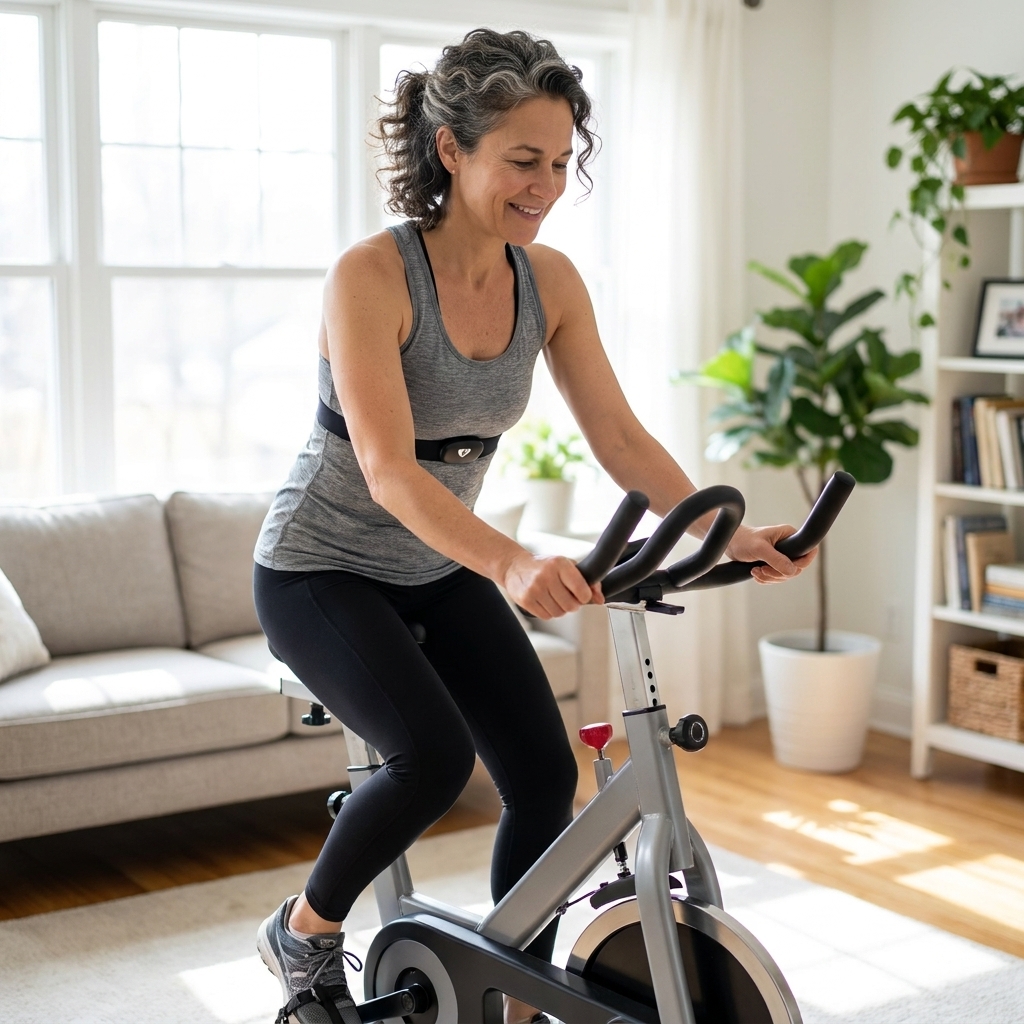
What Zone 2 is
Heart rate training zones are usually scaled from Zone 1 (very easy) to Zone 5 (max effort). Zone 2 typically sits in the easy-to-moderate range, sometimes described as “all day” pace. You’re working and breathing a bit deeper, but the effort feels sustainable.
One important note: zone systems vary. Some models define Zone 2 by a percentage of max heart rate, others tie it to lactate or ventilatory thresholds, and your numbers can also shift by modality (for example, running heart rate is often higher than cycling at the same perceived effort). So think of Zone 2 as an intensity target, not a single perfect number.
Physiologically, Zone 2 is often described as the intensity where you’re primarily using aerobic metabolism, with lactate production staying relatively low and manageable. Over time, training here can support adaptations like:
- Better mitochondrial function (your cells get more efficient at making energy)
- Improved aerobic base (you can do more work before you feel winded)
- Improved metabolic flexibility (you can shift between fat and carbohydrate use more smoothly)
- Lower recovery cost compared with a steady diet of high-intensity sessions
Zone 2 isn’t “magical.” It’s repeatable, and repeatable is where the long-term cardiovascular payoff lives.
How Zone 2 should feel
If heart rate math makes your eyes glaze over, start with feel. In real life, your sleep, caffeine, heat, dehydration, medications, and stress can all change your heart rate on a given day. So I like pairing numbers with cues.
The talk test
- In Zone 2: You can speak in full sentences without strain. You could talk to a friend, but you wouldn’t want to monologue.
- Too easy (Zone 1): You can sing, breathe through your nose easily, and barely feel like you’re exercising.
- Too hard (Zone 3+): You can only get out a few words at a time and feel that urge to push.
If you don’t have a heart rate monitor, this is your best tool. A simple target is 20 to 40 minutes at a conversational pace where you can keep sentences going without gasping.
Perceived effort (RPE)
On a 1 to 10 effort scale, Zone 2 is often around 4 to 6 out of 10. You’re steady, not strained.
If you finish a Zone 2 session and feel like you could do another 20 minutes at the same pace, that’s often a sign you were right in the neighborhood.
How to estimate Zone 2 heart rate
There are several ways to estimate Zone 2. None are perfect, especially because true training zones are best determined from lab testing (like lactate or ventilatory threshold testing). But you can get close with practical methods.
Method 1: Percent of max heart rate
A common starting estimate is:
- Zone 2 ≈ 60% to 70% of max heart rate
Some systems use slightly higher ranges (for example, mid-60s to mid-70s). This is why it helps to pair the math with the talk test.
If you don’t know your true max heart rate, the classic estimate is:
- Estimated max HR = 220 − your age
Example: If you’re 40, estimated max HR is 180 bpm. Zone 2 would be about 108 to 126 bpm using the 60% to 70% convention.
Pros: Quick and easy. Cons: Max HR varies a lot person to person, so this can under- or overshoot.
Method 2: Heart rate reserve (Karvonen)
This uses your resting heart rate, which adds a layer of personalization.
Step 1: Estimate max HR (220 − age) or use a known max from testing.
Step 2: Calculate heart rate reserve (HRR):
- HRR = max HR − resting HR
Step 3: Calculate Zone 2 using 60% to 70% of HRR, then add resting HR back:
- Zone 2 low = (HRR × 0.60) + resting HR
- Zone 2 high = (HRR × 0.70) + resting HR
Example: Age 40, estimated max 180. Resting HR 60. HRR = 120. Zone 2 = (120×0.60)+60 to (120×0.70)+60 = 132 to 144 bpm.
If that range looks higher than the max-HR-percentage method, you’re not imagining it. HRR-based zones often land higher because they account for your resting heart rate instead of treating everyone like they start at zero. Neither method is “the one true answer.” Use either as a starting point, then sanity-check it with how you feel.
Pros: Often closer to reality than max HR percentages. Cons: Still depends on estimated max HR unless you have a tested value.
Method 3: A practical “cap” check
Numbers are useful, but Zone 2 is ultimately about staying below the point where you start accumulating fatigue quickly. This is a useful starting anchor, not a validated substitute for lab testing.
Here’s the check I use with beginners:
- Start easy for 10 minutes.
- Gradually increase pace until your breathing is deeper but controlled.
- Ask: “Can I speak in full sentences, calmly?”
- If yes, hold that effort for 10 minutes and note your average heart rate.
That average can be a realistic personal anchor. Re-check it every few weeks as your fitness improves, or anytime your training modality changes (bike vs run vs incline walk).

How to stay in Zone 2
The biggest beginner frustration is this: you start moving, heart rate climbs, and suddenly you’re “out of Zone 2” even though it feels fine. A few tips help a lot.
Use the right heart rate tool
- Chest strap: Usually the most accurate for steady-state training.
- Wrist optical sensor: Convenient, but it can lag or misread with sweat, cold weather, darker tattoos, or gripping handlebars.
If your wrist monitor seems jumpy, look out for “cadence lock” during cycling or running, where the watch temporarily mistakes movement rhythm for pulse. When in doubt, trust the talk test and smooth breathing.
Expect cardiac drift
During longer sessions, heart rate tends to creep upward even if your pace stays the same. Heat, dehydration, and fatigue contribute. This is normal.
What to do:
- Start a little easier than you think you need to.
- Hydrate, especially in warm conditions.
- Be willing to slow down midway to stay in Zone 2.
Choose Zone 2 friendly modalities
Some activities spike heart rate fast (especially running for newer runners). These options often make Zone 2 easier to control:
- Incline walking
- Cycling (outdoors or stationary)
- Rowing at a smooth, steady stroke rate
- Elliptical
- Easy swimming (if you’re already comfortable in the water)
Beginner Zone 2 workouts
Zone 2 works because it’s repeatable. Your “perfect” plan is the one you can actually do on a regular Tuesday.
Workout A: Simple starter
- 5 to 10 minutes easy warm-up
- 20 minutes Zone 2
- 5 minutes easy cool-down
Do this 2 to 4 times per week.
Workout B: Steady build
- 10 minutes easy warm-up
- 30 to 45 minutes Zone 2
- 5 minutes easy cool-down
Do this 1 to 3 times per week, depending on your schedule and recovery.
Workout C: Low-stress sandwich
This is great if you’re coming back from burnout, poor sleep, or a stressful season.
- 10 minutes very easy (Zone 1)
- 20 minutes Zone 2
- 10 minutes very easy (Zone 1)
You still get meaningful aerobic work, with a gentler overall load.

How much Zone 2 to do
More isn’t always better, but some is almost always better than none.
- If you’re new to cardio: Aim for 60 to 90 minutes total per week, split into 2 to 4 sessions.
- If you’re building a base: Aim for 120 to 180 minutes per week.
- If you already train regularly: Many people feel great with 2 to 4 Zone 2 sessions weekly plus 1 to 2 higher-intensity or strength sessions, depending on goals.
The best dose is the one that supports your life and your sleep. If your training plan consistently worsens your sleep or leaves you irritable and sore, it’s not a badge of honor. It’s a red flag.
Zone 2 vs HIIT
You don’t need to pick a team. Zone 2 and higher-intensity work can complement each other.
- Zone 2: Builds aerobic capacity, improves efficiency, supports recovery, and is easier to do often.
- HIIT or intervals: Improves top-end capacity and can be time-efficient, but it costs more recovery.
If you’re just starting, I’d rather see you build the Zone 2 habit first. Once you’ve got 4 to 8 weeks of consistency, adding one short interval session per week can help if it fits your goals and you recover well.
Common mistakes
Mistake 1: Going too hard because it feels “too easy”
Zone 2 is supposed to feel sustainable. If you always push into that heavy-breathing, can’t-talk zone, you’ll rack up fatigue and your easy days stop being easy.
Fix: Set a heart rate cap, use the talk test, and give yourself 10 minutes to settle in before judging effort.
Mistake 2: Treating formulas like facts
Age-based formulas can be off by 10 to 20 beats per minute or more, and different zone systems use different cutoffs.
Fix: Use the Karvonen method if you can, then compare your number to how you feel. If your “Zone 2” has you gasping, it isn’t your Zone 2.
Mistake 3: Ignoring sleep, heat, and stress
Your heart rate isn’t a moral score. If you slept poorly or it’s 90°F outside, Zone 2 may happen at a slower pace than usual.
Fix: Keep the intensity honest and let pace be the variable that changes.
Mistake 4: Only doing one long session on weekends
A single long session can help, but most people see bigger improvements with frequency.
Fix: Add two short sessions on weekdays. Even 20 to 30 minutes counts.
Safety notes
Zone 2 is generally safe for many people, but get individualized guidance before starting or significantly changing exercise if you:
- Have chest pain, unexplained shortness of breath, fainting, or heart palpitations
- Have known heart disease, uncontrolled high blood pressure, or a recent cardiac event
- Are pregnant or postpartum and unsure how to restart safely
- Take medications that affect heart rate (for example, beta blockers), since zone numbers may not apply in the usual way
If you have clearance but your heart rate behaves differently than expected, using the talk test and perceived exertion can be more reliable than strict heart rate zones.
FAQ
Is Zone 2 the same as the fat-burning zone?
It often overlaps, but I’d be cautious with the marketing language. Zone 2 tends to use a higher proportion of fat as fuel compared with higher intensities, but fat loss depends on many factors including total activity, nutrition, sleep, and stress.
Why does my heart rate spike when I run but not when I bike?
Running is weight-bearing and often more demanding mechanically. If you’re newer to running, heart rate can climb quickly even at slow paces. Cycling or incline walking may keep you in Zone 2 more easily while your aerobic base builds.
Can I do Zone 2 without a heart rate monitor?
Yes. Use the talk test and aim for a steady pace you can maintain for 30 to 60 minutes. If you can speak in full sentences without strain and feel like you could keep going, you’re likely close.
How long until I notice results?
Many people notice better stamina within 3 to 6 weeks if they train consistently, but it varies. Bigger changes in aerobic fitness and pace at the same heart rate often show up over 8 to 12+ weeks.
What’s the best time of day for Zone 2?
The best time is the time you can do consistently. If you’re dealing with sleep issues, morning or earlier-day sessions feel better for some people than late-night cardio. But your schedule matters, and consistency wins.
A simple next step
Pick one modality you enjoy, set a realistic schedule, and commit to two Zone 2 sessions this week. Keep them easy enough that you finish feeling steady, not depleted.
That’s how cardiovascular health is built in real life: small, repeatable choices that respect your body, your stress load, and your sleep.