Not all rest days are the same. Learn when to move, when to truly rest, and how to use both to support muscle growth, reduce soreness, and prevent injury.
Calma Path
October 18, 2026
Updated October 18, 2026
5 Balance and Stability Exercises for Healthy Aging
Build steadier balance with five simple, science-backed exercises that strengthen your legs and core, improve proprioception, and reduce fall risk. Options for beginners included.

Written by
Maya Reynolds
Maya Reynolds is a registered nurse turned wellness educator who specializes in translating clinical research into accessible, everyday health habits. She is passionate about helping people sustainably improve their fitness, sleep, and nutrition without the pressure of toxic wellness culture.
Balance is not just a “nice to have.” It is a full-body skill that depends on leg strength, core control, joint mobility, vision, and your inner ear, plus an often overlooked piece called proprioception, which is your brain’s ability to sense where your body is in space.
As a nurse, I saw how quickly a fall can change someone’s independence. The hopeful part is that balance can improve at any age, although progress may be slower or require more support if you are dealing with things like progressive neurologic disease, significant vestibular loss, or advanced neuropathy. Effective programs typically combine strength (so your body can catch you) with neuromuscular practice (so your brain can react faster).
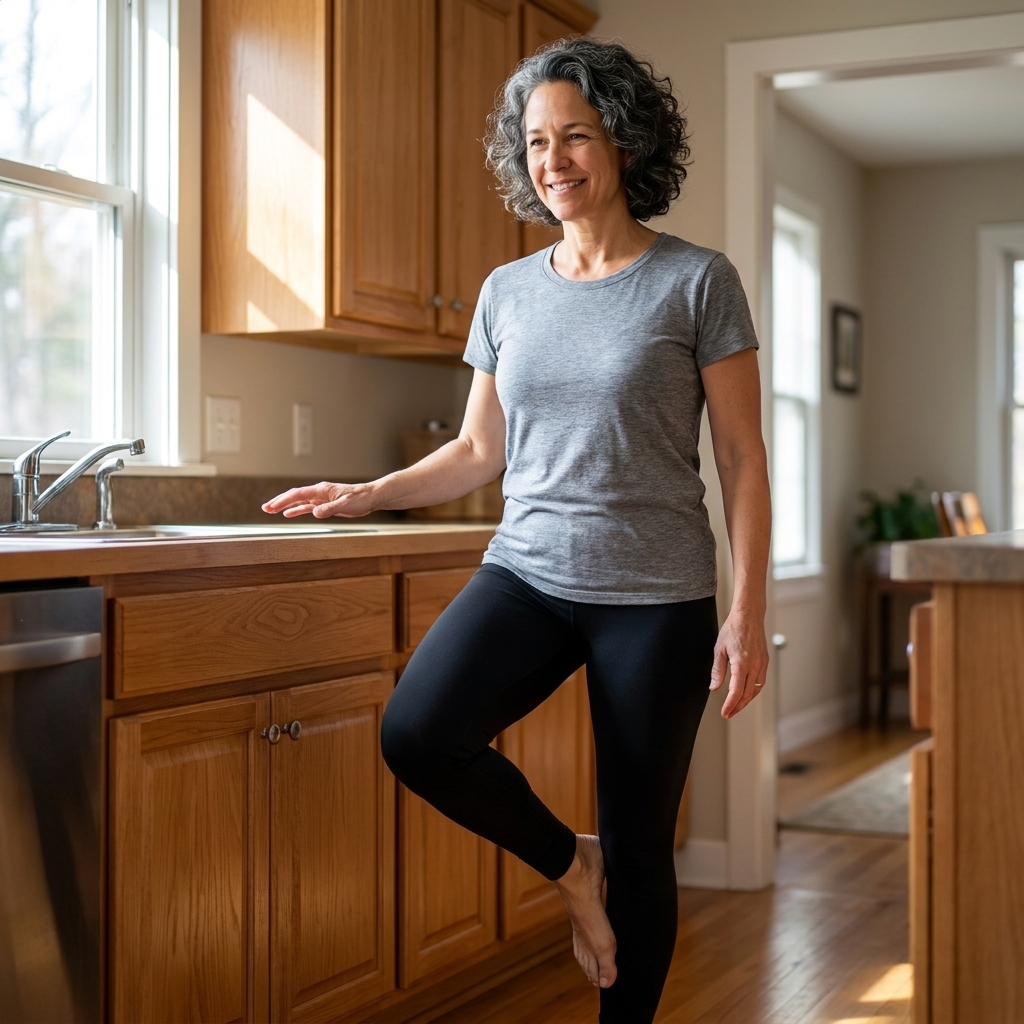
Below are five exercises I consider “essentials” because they train the exact patterns that protect mobility: getting up and down, stepping, stabilizing on one leg, and recovering from a loss of balance. No fancy equipment required.
Before you start
Safety first
- Use a stable support: a kitchen counter, sturdy chair, or railing. Avoid wobbly furniture.
- Clear the area: move rugs, cords, pets, and clutter out of your path.
- Wear supportive shoes or go barefoot if your floors are non-slip and you feel steadier that way.
- Stop if you feel sharp pain, chest pain, dizziness, or new numbness. Also stop and seek help if you get true vertigo (the room spinning), sudden severe headache, new weakness, or sudden vision changes.
- If you have a history of fainting, stroke, significant neuropathy, recent surgery, or frequent falls, check with your clinician or a physical therapist first.
- Medications and vision changes matter. If you recently started a sedative, sleep aid, or a blood pressure medication (or your prescription changed) and you feel more unsteady, bring it up with your clinician.
How often?
Most people do well with 3 days per week, 15 to 25 minutes. If you are working on fall prevention, shorter daily practice can be even better because your nervous system learns by repetition.
Warm-up (2 minutes)
- March in place: 30 to 45 seconds
- Heel raises (holding a counter): 10 reps
- Hip hinges (hands on thighs, small range): 8 reps
How to progress safely
If balance work is new, progress in this order (it keeps you honest and reduces the chance you jump too far ahead):
- Increase time first (longer holds or slightly longer sets).
- Then reduce support (palm to fingertips to hovering).
- Then add movement (head turns, toe taps, steps).
- Unstable surfaces (like a folded towel) come last, and only if you are already steady.
1) Sit-to-Stand
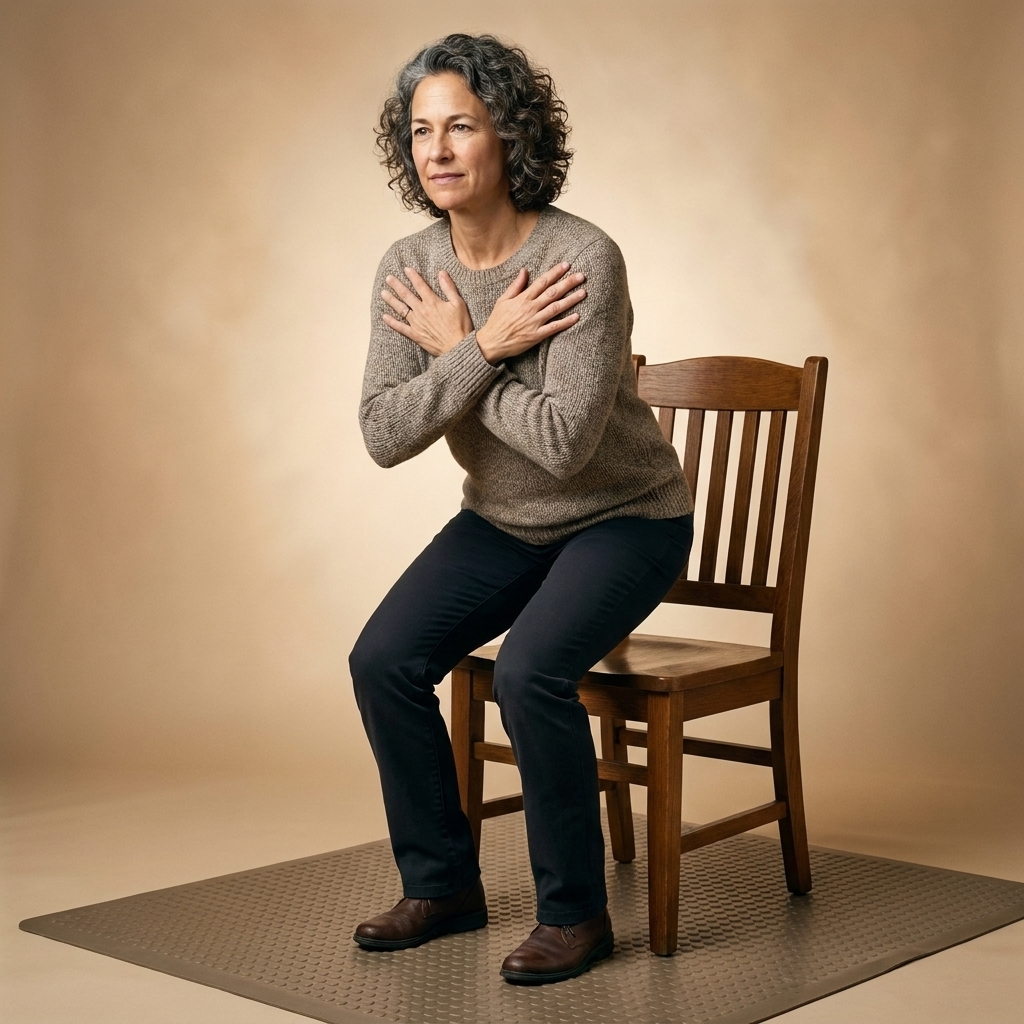
If I could only pick one functional strength move for healthy aging, it might be this. Standing up from a chair trains your quads, glutes, and core, and that strength directly supports balance recovery.
How to do it
- Sit tall near the front half of a sturdy chair, feet flat and hip-width apart.
- Lean your chest slightly forward, press through your whole foot, and stand up.
- Pause 1 second.
- Lower slowly back to the chair for a 3-count, lightly touch down, then repeat.
Sets and reps
2 to 3 sets of 6 to 10 reps.
Make it easier
- Use your hands on the chair or your thighs.
- Raise the seat height with a firm cushion.
Make it harder
- Hold a light weight at your chest.
- Try a 5-second slow lower.
2) Tandem stance and walk
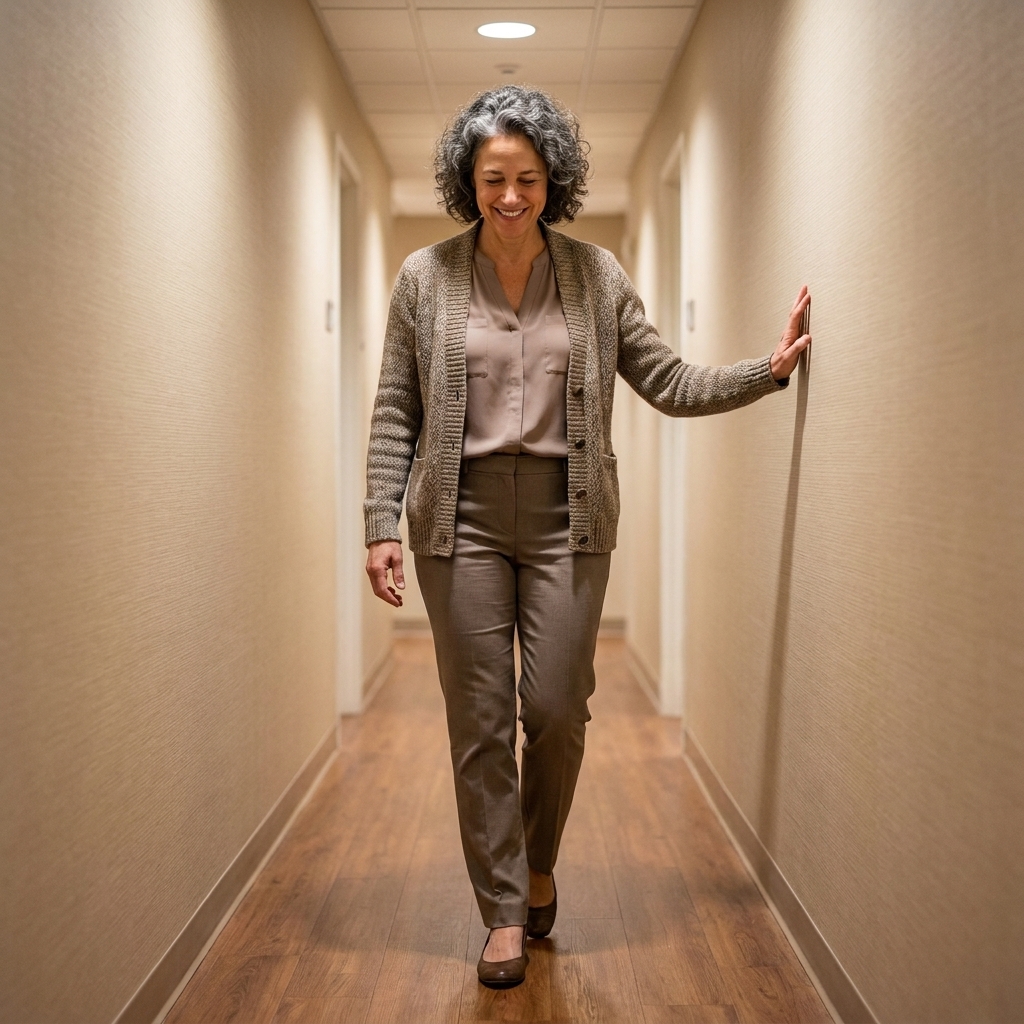
This is “tightrope” practice, and it challenges your balance by narrowing your base of support. It is also a gentle way to train what physical therapists sometimes call ankle and hip strategies, basically the two main ways your body auto-corrects when you start to sway. Sometimes you correct with a small ankle shift, and sometimes you need a bigger hip adjustment.
How to do it
Tandem stance:
- Stand with one foot directly in front of the other, heel touching toes.
- Hold for 20 to 40 seconds, then switch sides.
Tandem walk:
- Take 6 to 10 slow heel-to-toe steps forward.
- Turn around carefully and repeat.
Cues that help
- Pick a spot at eye level and keep your gaze steady.
- Keep your ribs stacked over your pelvis, avoid leaning.
- Light fingertip support is fine. The goal is safety plus practice, not proving something.
Progressions
- Reduce hand support from palm to fingertips.
- Turn your head slowly left and right while holding tandem stance.
3) Single-leg stand
Single-leg balance shows up everywhere: stepping over a curb, putting on pants, climbing stairs, getting in and out of the shower. Practicing it improves coordination between your foot, ankle, hip, and core.

How to do it
- Stand tall near a counter.
- Shift your weight onto one leg.
- Lift the other foot just an inch or two off the ground, knee relaxed.
- Hold 10 to 30 seconds. Switch sides.
Sets
2 to 4 holds per side.
Make it easier
- Keep a fingertip on the counter.
- Try a “kickstand” stance: toes of the lifted foot lightly touching the floor for balance.
Make it harder
- Do gentle toe taps: tap the lifted foot forward, side, and back while staying tall.
- Stand on a folded towel to add a little instability (only if you are already steady and you have support within reach).
Nurse note: If you have significant numbness in your feet from neuropathy, balance training is still helpful, but you will want extra support and a slower progression. A physical therapist can tailor this safely.
4) Step-ups
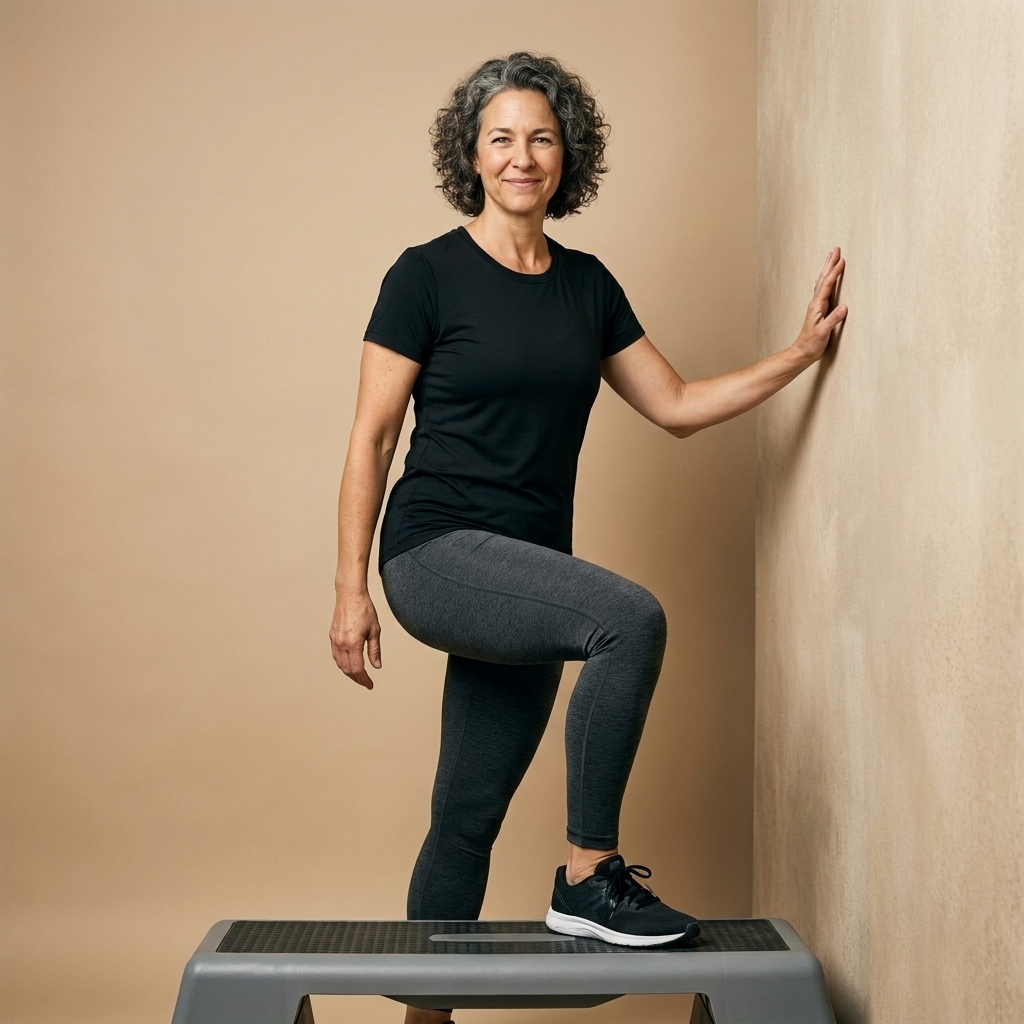
Transitions like curbs and stairs can be where people feel most unsteady, especially when they are tired or distracted. Step-ups build leg strength and train stability in a way that closely matches daily life.
How to do it
- Use a low step at first, like the bottom stair or a sturdy step platform.
- Use a hand support as needed (wall, railing, or counter nearby).
- Place your whole foot on the step.
- Press through the heel and midfoot to stand tall on the step.
- Control the descent back down. Avoid “plopping” your foot.
Sets and reps
2 to 3 sets of 6 to 10 reps per side.
Form cues
- Keep your knee tracking in line with your second and third toes.
- Keep your hips level, avoid dropping one side.
- Move slowly enough that you could stop at any point.
Progressions
- Increase step height gradually.
- Add a brief pause at the top, then lower for a 3-count.
5) Suitcase carry
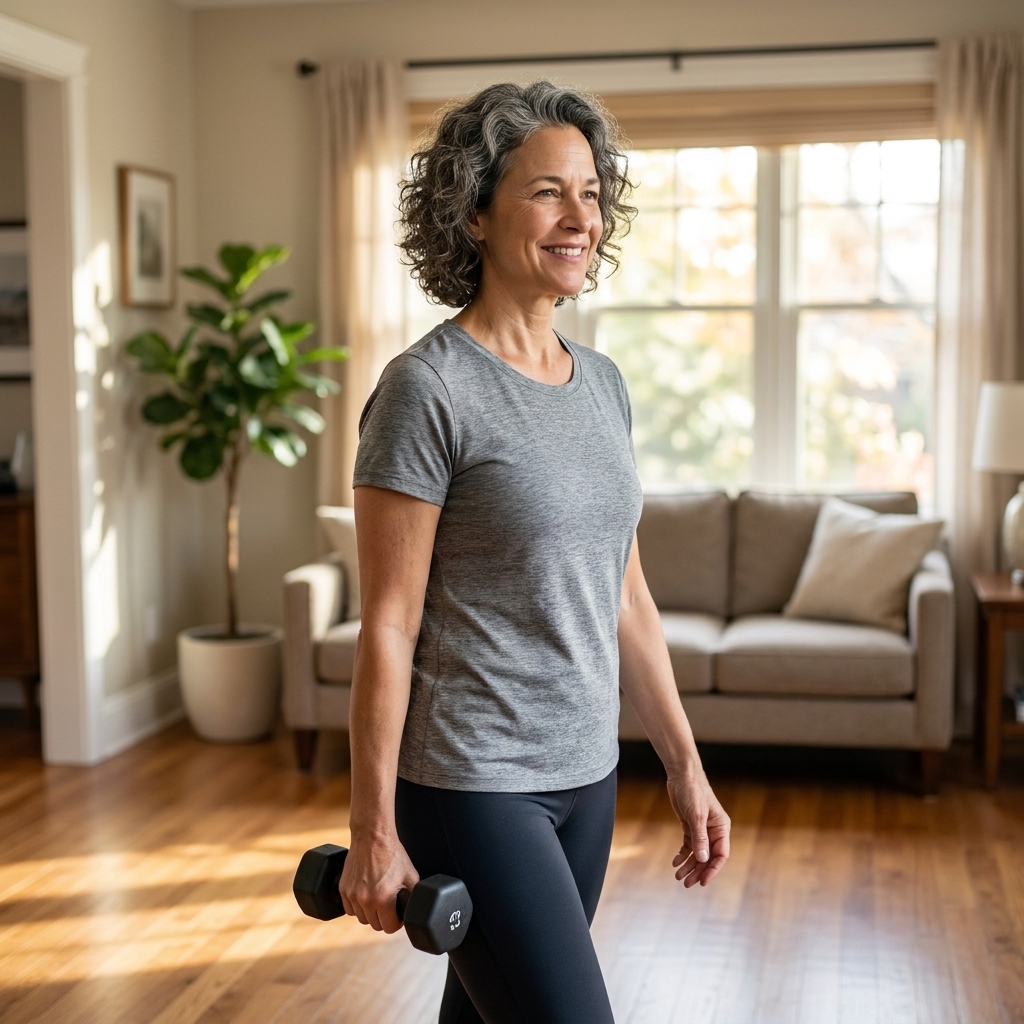
This one is deceptively simple and incredibly functional. Carrying weight on one side challenges your deep core and hip stabilizers to keep you upright, which is exactly what you need when you are walking with groceries, a backpack, or laundry.
How to do it
- Hold a moderately heavy object in one hand, like a dumbbell or a loaded tote bag.
- Choose a load that is heavy enough that you have to brace, but light enough that you can keep your shoulders level and breathe normally.
- Stand tall, shoulders level, ribs stacked over pelvis.
- Walk slowly for 20 to 40 seconds.
- Switch hands and repeat.
Sets
2 to 4 carries per side.
Make it easier
- Use a lighter weight.
- Walk shorter distances with rests.
Make it harder
- Increase the weight slightly.
- Walk a gentle figure-eight pattern, keeping control the whole time.
15-minute routine
If you want a simple plan, here is a well-rounded session you can repeat 3 days per week:
- Sit-to-Stand: 2 sets of 8
- Tandem stance: 2 holds of 30 seconds per side
- Single-leg stand: 3 holds of 15 to 25 seconds per side
- Step-ups: 2 sets of 8 per side
- Suitcase carry: 3 carries of 30 seconds per side
How to know it is working
Look for small wins: less wobbling, needing less fingertip support, faster confidence stepping off a curb, or simply feeling calmer when you move. The nervous system changes with consistent practice, and it does not require perfection.
Common questions
Is walking enough?
Walking is wonderful for cardiovascular health and endurance, but balance often improves faster when you add targeted practice like single-leg work, narrow-base standing, and strength training for the legs and hips.
What if I feel unsteady?
That is exactly when these are most valuable, but the setup matters. Use a counter, reduce the challenge (shorter holds, higher chair, lower step), and keep your environment clear. If unsteadiness is new, worsening, or paired with symptoms like true spinning vertigo, fainting, or sudden weakness, check in with a clinician.
Do I need special equipment?
No. In fact, I prefer starting with basics and using your home environment safely. A folded towel or a slightly softer surface can be a later progression, but strength and repetition are the real foundation.
When should I see a physical therapist?
If you have had a fall in the past year, feel dizzy when you stand, have significant foot numbness, have persistent vertigo, or avoid activities because of fear of falling, a PT can assess your gait, strength, and vestibular function and personalize a plan.
A final word
Balance training is not about chasing a perfect “fitness” version of yourself. It is about protecting future-you: the you who wants to keep hiking, traveling, gardening, carrying groceries, and getting off the floor without panic.
Start with the safest version of these moves, do them consistently, and let progress be boring. Boring is good. Boring is sustainable. And sustainable is what keeps you steady.